We use our own and third-party cookies for analytical and technical purposes, processing data necessary to create profiles based on your browsing habits. You can find more information and configure your preferences in 'Cookie Settings'.
 Back
Back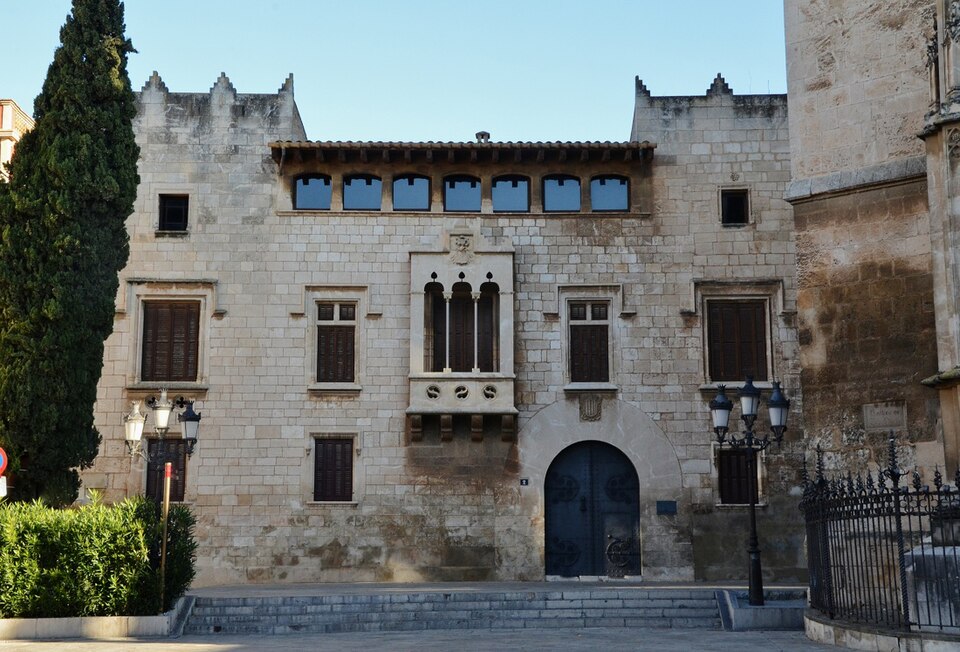
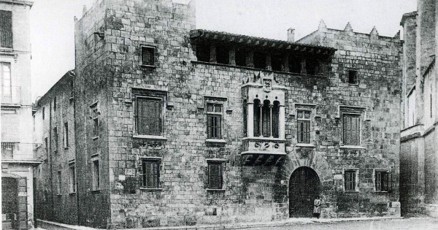
The Gothic palace that presides over Plaça de Jaume I is an old acquaintance of Vilafranquins: some call it Palau Baltà, others recall the old name of Palau del Fraret or, simply, Can Babau. The building stands on the site where the original castle of the town was located and its medieval footprint is still breathed in every stone.
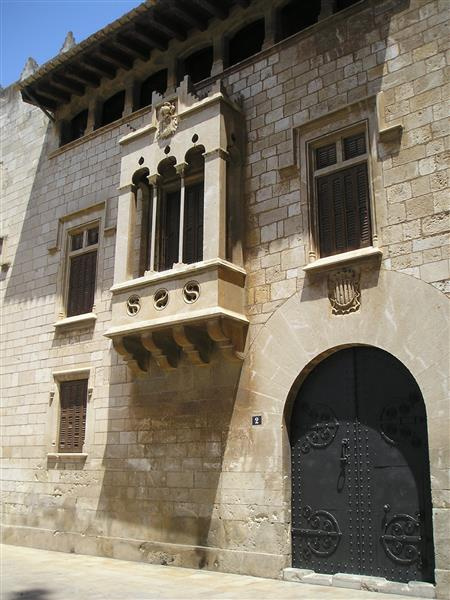
Architecturally, the complex - ground floor, noble floor and attic covered with Arabic tile - is characterized by the three facades that overlook the square and the streets of Torre i Escudellers. The main one exhibits two side towers that protrude from the central body, an off-center domed doorway and, as a result of an eightieth century reform, a small tribune with crowned windows that has become its iconic image. In the inner courtyard, currently covered, stairs, a Gothic window and an upper gallery of pointed arches are preserved.
Sources place the origin after 1308, when the Babau family acquired the land. In 1522 the façade was unified and extended with neighbouring houses, giving it the palatial air that we admire today. In 1750 it passed to the Sarriera, Marquis of Manresana, and in the middle of the 19th century Josep Baltà bought it, gave it a name and added the tribune, modernizing the appearance without betraying its essence.
The history of the Palace is also one of a succession of uses: it was a hostel popularly known as “del Pepet Vermell”; in 1977, the Vilafranca Museum and the Caixa Penedès rented the ground floor for cultural events, christening it the Baltà Forum, a space that many residents remember for concerts and exhibitions.
Declared a Cultural Asset of National Interest, the palace is one of the most complete civil Gothic testimonies of the Penedès. Despite being privately owned and not regularly visited, its monumental presence gives the square a perfect scenography, especially during the Festa Major, when castles and traditional dances literally dance at its feet.


 CAT
CAT ESP
ESP FRA
FRA POR
POR ITA
ITA ALE
ALE NLD
NLD ZH
ZH JA
JA