We use our own and third-party cookies for analytical and technical purposes, processing data necessary to create profiles based on your browsing habits. You can find more information and configure your preferences in 'Cookie Settings'.
 Back
Back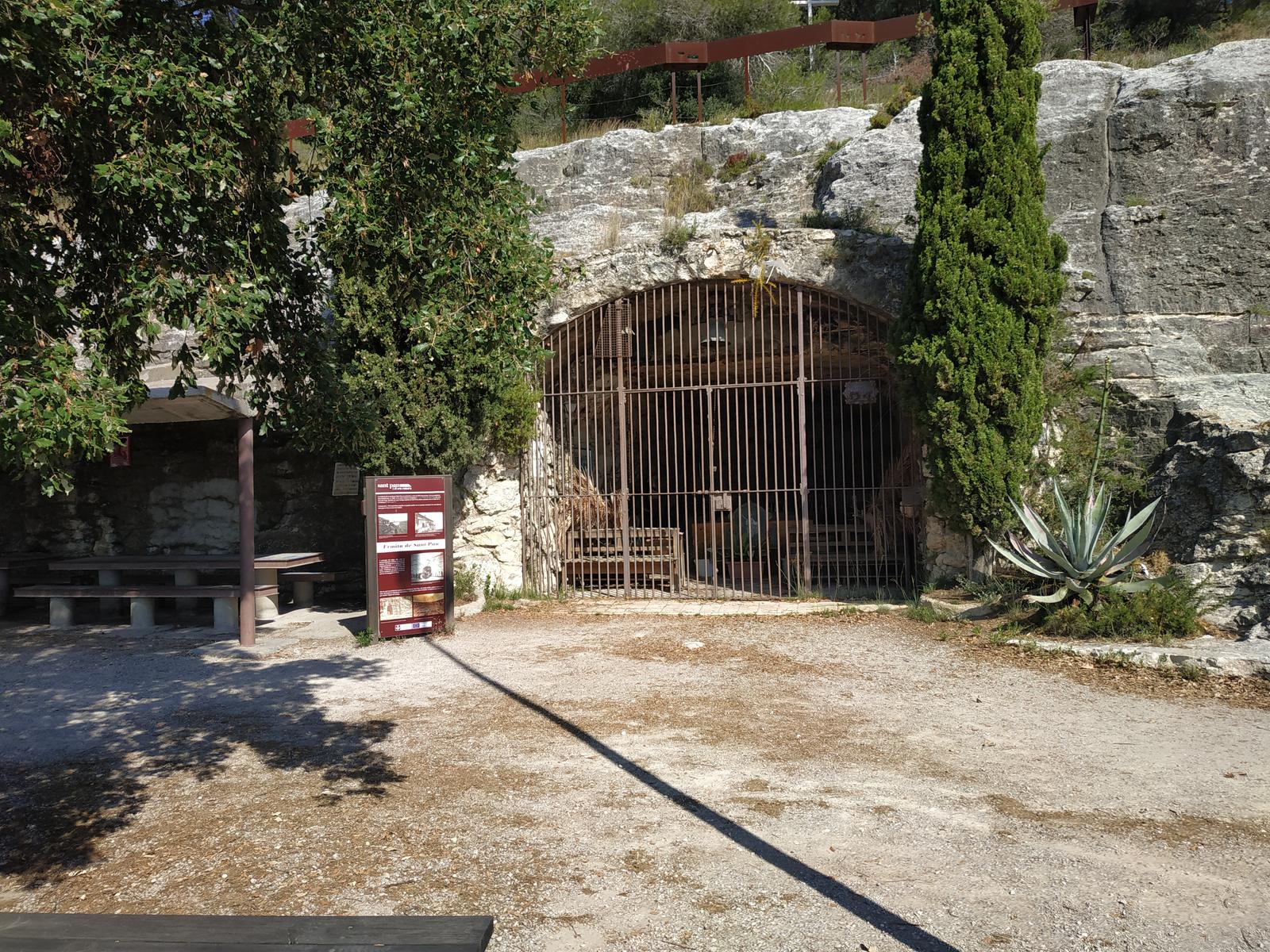
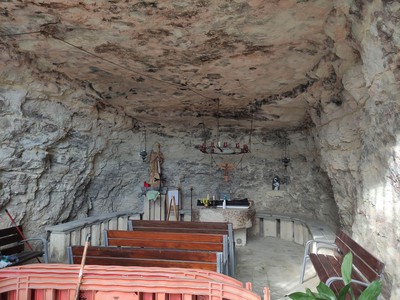
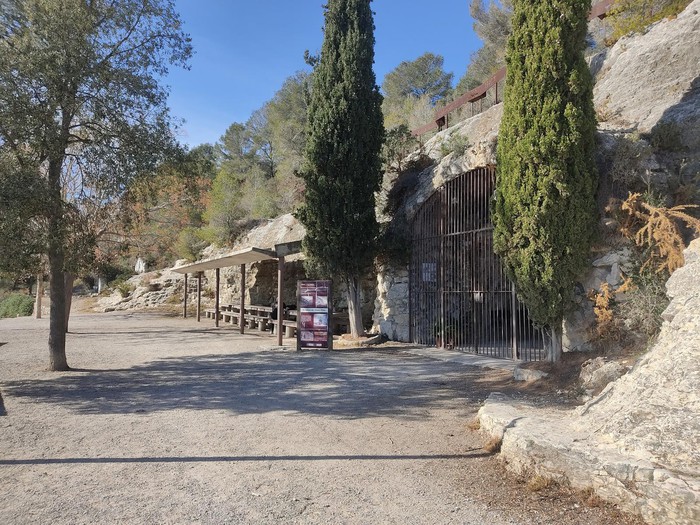
At the highest point of the hill overlooking the plain of Vilafranca, 302 m above sea level, hides the hermitage of Sant Pau, a quiet corner that tells us about the relationship between man and nature for more than six centuries. The first hermits are documented in the year 1392, when a period of spirituality linked to the austere life and the work of the land opens. There is no visible trace of the medieval hermitage, demolished in 1910, but the rock has preserved its mark: an excavated cavity was conceived as the apse of a new temple which, at the beginning of the 20th century, was never completed.
When we got there, we still distinguish the holes in the stone where the roof beams fitted and small niches intended for images or votive lamps. Outside, a fountain built at the beginning of the 20th century adopts the same apsidal shape and supplies fresh water to the visitor, reinforcing the idea of rest and hospitality that characterized every hermit community. The complex is completed by a side chapel, also carved into the rock, which preserves a modern glazed tile dedicated to Sant Jaume and Sant Jordi; in front of it an artificial retreat has been practiced that invites rest and contemplation.
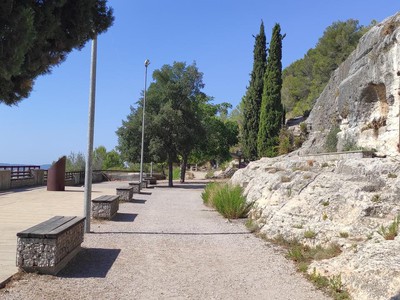
From the sunny side, a stony path leads us to the natural viewpoint that, without obstacles, opens the view over the capital of Alt Penedès, the mosaic of vineyards and, on clear days, to the contours of Montserrat. This exceptional panorama made the site, already in the 19th century, a popular destination for local processions and pilgrimages. The chronicles recall that every January 25, the day of the Conversion of Saint Paul, the neighbors went up here to bless the lands and implore a good harvest.
The lack of a fully preserved building has prevented the complex from being included in the Inventory of Architectural Heritage of the Generalitat; however, popular memory has kept it alive. Several attempts at reconstruction — the most ambitious in 1902 — were halted by lack of resources, and the work done is limited to the cave-apse and the lining of the fountain.
Today the mountain of Sant Pau is a recreation area and a favorite place for ornithologists, photographers and hikers. The clean air, the aroma of thyme and rosemary and the murmur of the water in the spring create an atmosphere of peace that justifies the name of the place. Without any kind of fence or locker, access is free all year round; you just have to respect the stillness of the place and the fragile geology of the limestone rock that shapes it.


 CAT
CAT ESP
ESP FRA
FRA POR
POR ITA
ITA ALE
ALE NLD
NLD ZH
ZH JA
JA