We use our own and third-party cookies for analytical and technical purposes, processing data necessary to create profiles based on your browsing habits. You can find more information and configure your preferences in 'Cookie Settings'.
 Back
Back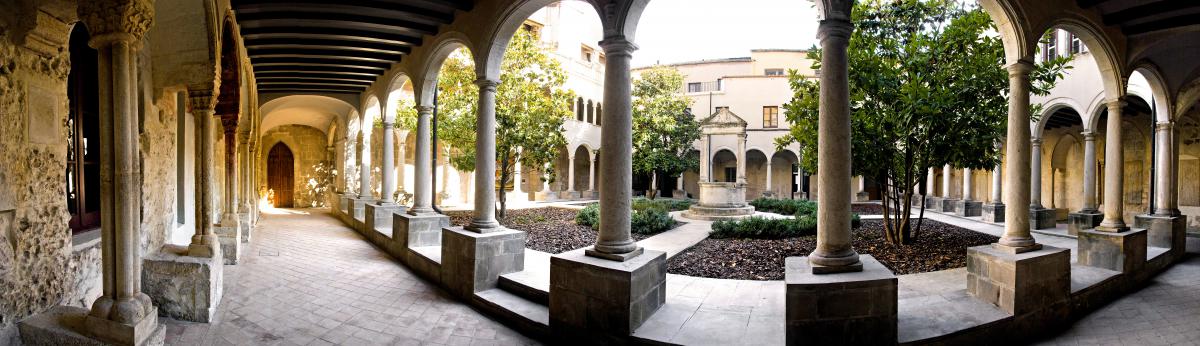
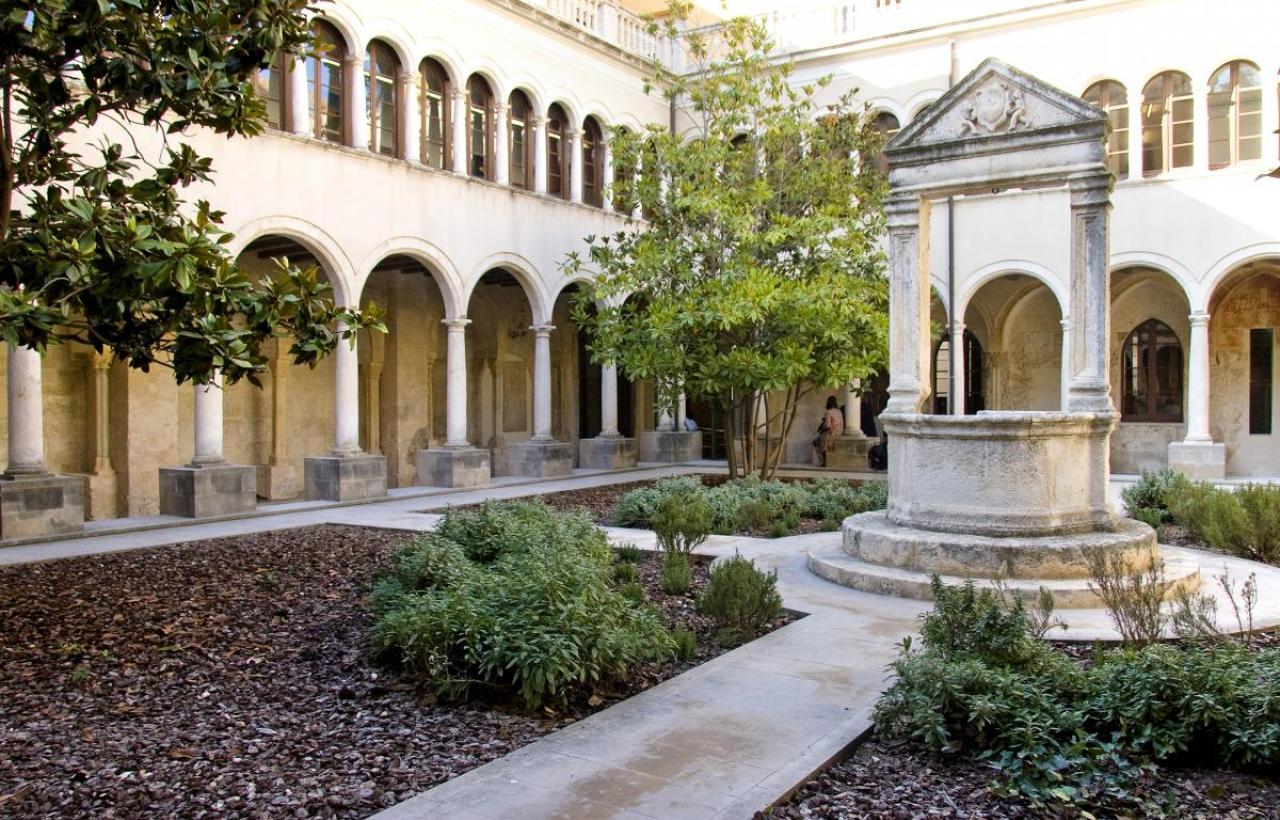
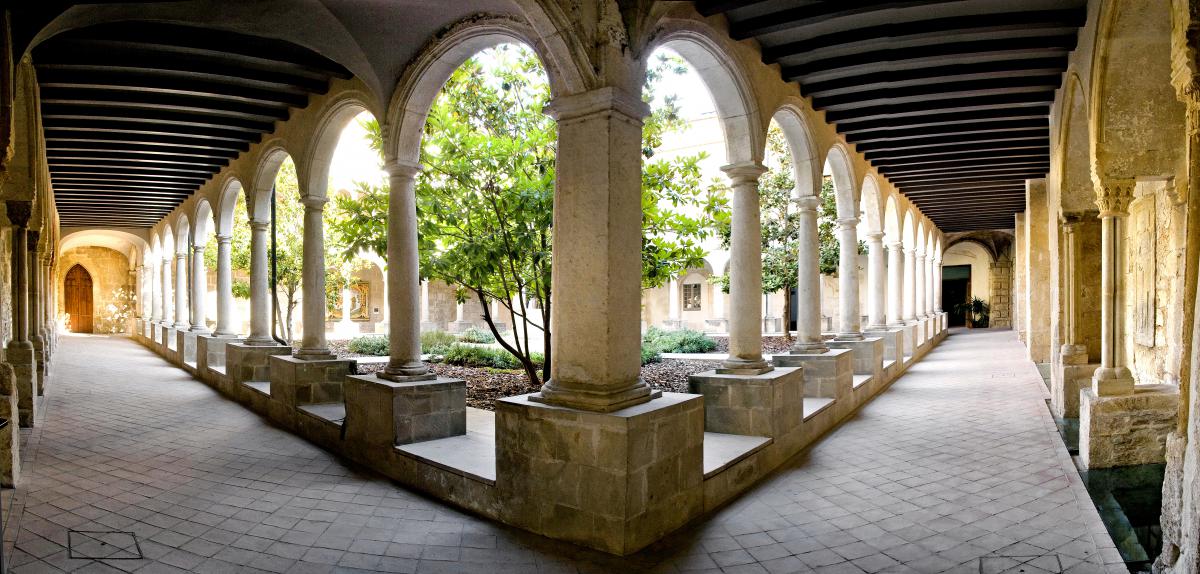
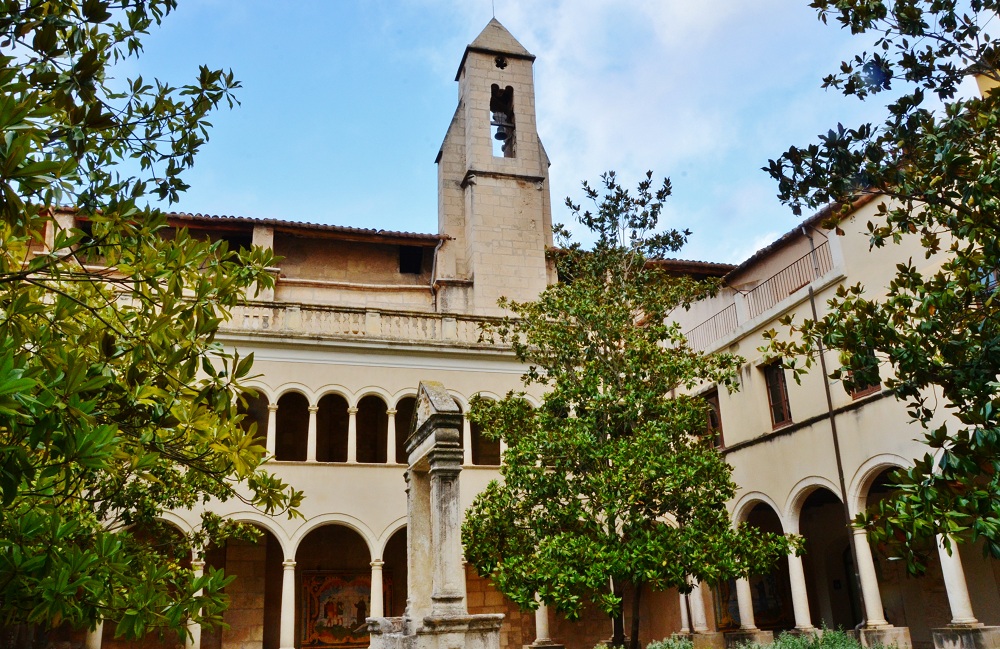
Among the venerable stones of Carrer de Sant Pere, the cloister of the convent of Sant Francesc is probably the quietest corner of the entire old town of Vilafranquí. Founded by the Franciscan order in the 13th century, the original complex included a church, dormitories and community outbuildings, but the earthquake of historical events - wars, expropriation and sanitary uses - has left us a reformulated legacy. Today the Gothic church from 1349 and, above all, the Renaissance cloister that replaced the primitive wing towards the end of the 16th century are preserved.
The square floor plan is articulated around a landscaped courtyard; four wings covered with light crucible vaults rest on Tuscan columns and simple capitals, an austere language that refers directly to mendicant ideals. On the walls, archways and funerary slabs remind that the space became a pantheon of the local nobility. Sarcophagi of the Penyafort, Cervelló or Bartholomew lineage can be identified, some of them with polychrome shields and Gothic inscriptions that are still legible. This funerary function explains the unexpected artistic richness of a Franciscan cloister: heraldic panels, the first slabs dating from the 14th century and a collection of awards that today form an authentic open-air lapidary museum.
The Catalan Gothic architecture of the annexed church, also accessible on restricted visits, is manifested in a unique nave of six sections, pointed arches and a polygonal apse that retains part of the original polychrome. In the southernmost side chapel, the famous Altarpiece of the Virgin and Saint George is venerated, attributed to Lluís Borrassà (c. 1400), a jewel of international Gothic that gives the ensemble an added value even more appreciated by scholars.
After the expropriation of Mendizábal (1835) the convent was converted into a military hospital and, later, into a regional hospital. The cloister, however, was respected and even served as an access corridor to the nursing rooms; from that period there are still graffiti of soldiers and small marks on the stone. The definitive heritage recovery came in the middle of the 20th century, when the building was declared a Cultural Asset of Local Interest and the cloister became a museum space.
Today the City Council organizes guided tours where the quality of the vault keys, the remains of mural painting, the lapidary collection and the peculiar acoustics that reign under the vaults stand out. In the summer, a concert of ancient music fills this old meditation venue with resonances again. The cloister of Sant Francesc is, therefore, much more than a stone garden: it is a miniature summary of seven centuries of Vilafrancan history, a refuge of cool shade where medieval memory coexists with Renaissance piety and contemporary cultural rhythm.


 CAT
CAT ESP
ESP FRA
FRA POR
POR ITA
ITA ALE
ALE NLD
NLD ZH
ZH JA
JA