We use our own and third-party cookies for analytical and technical purposes, processing data necessary to create profiles based on your browsing habits. You can find more information and configure your preferences in 'Cookie Settings'.
 Back
Back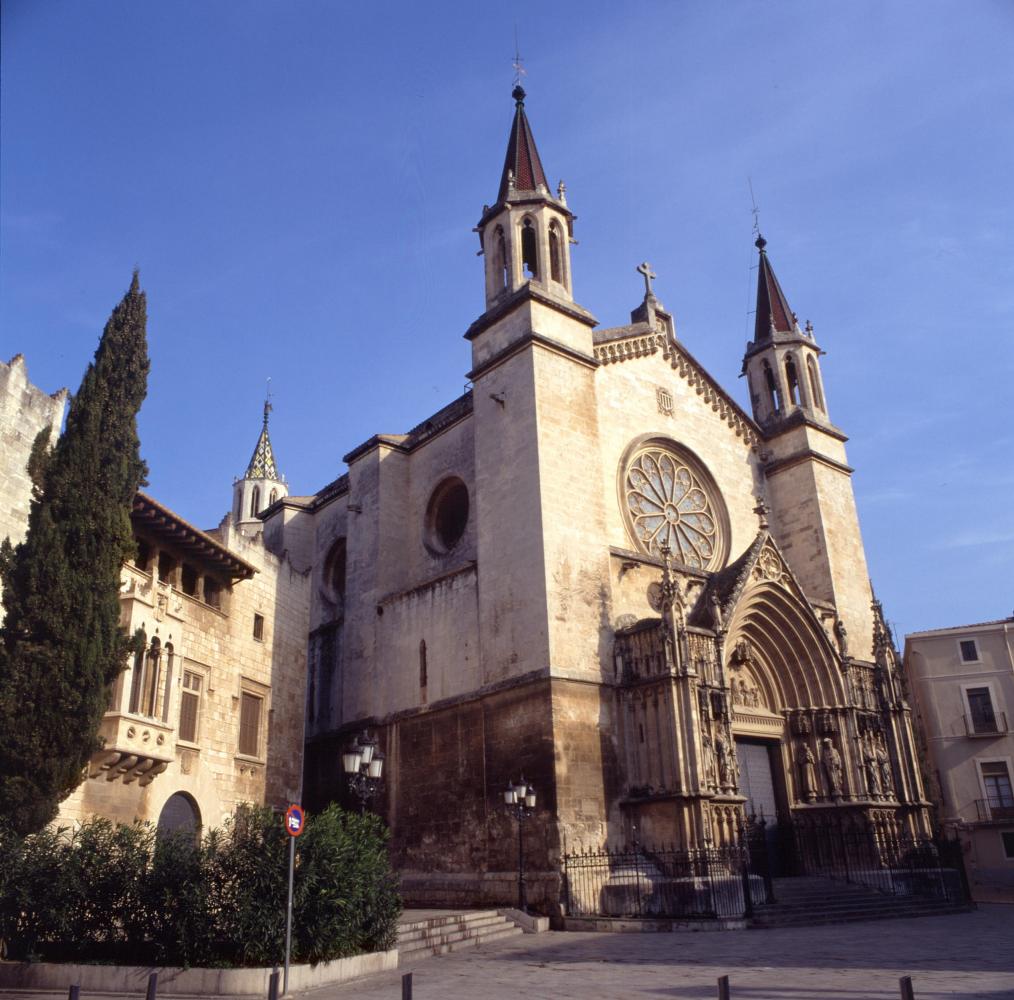
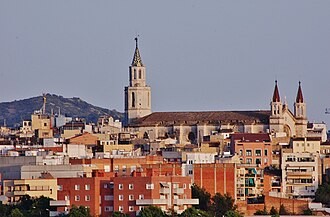
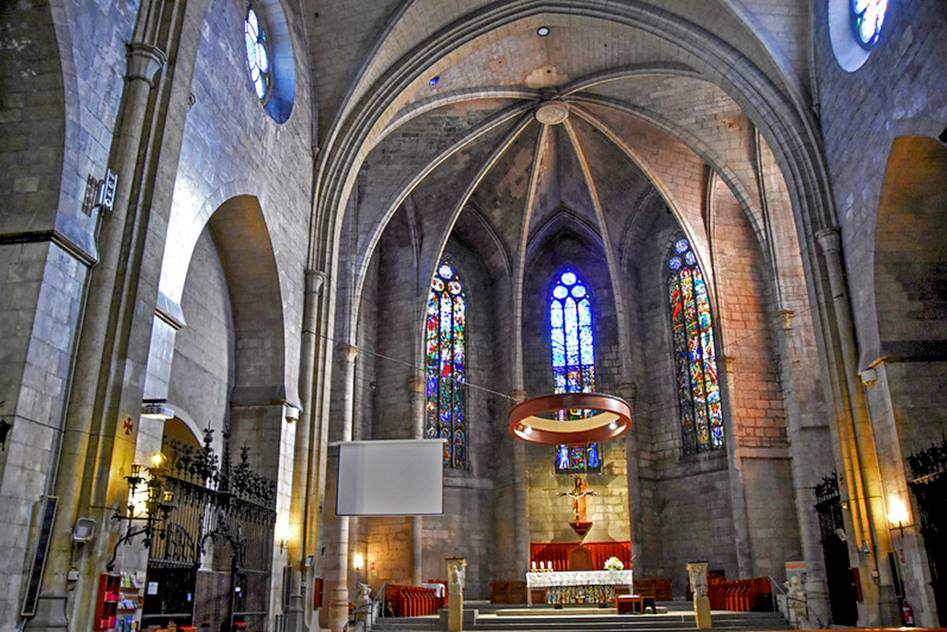
In the middle of the medieval town, the Basilica of Santa Maria emerges as the great spiritual silhouette of Vilafranca. The current building, consecrated in 1489 but built on a Romanesque temple of the late 12th century, is the first Catalan parish built entirely following the Gothic single nave. Its floor plan — five sections covered with cross vaults and side chapels embedded between colossally thick buttresses — offers a feeling of unusual breadth.
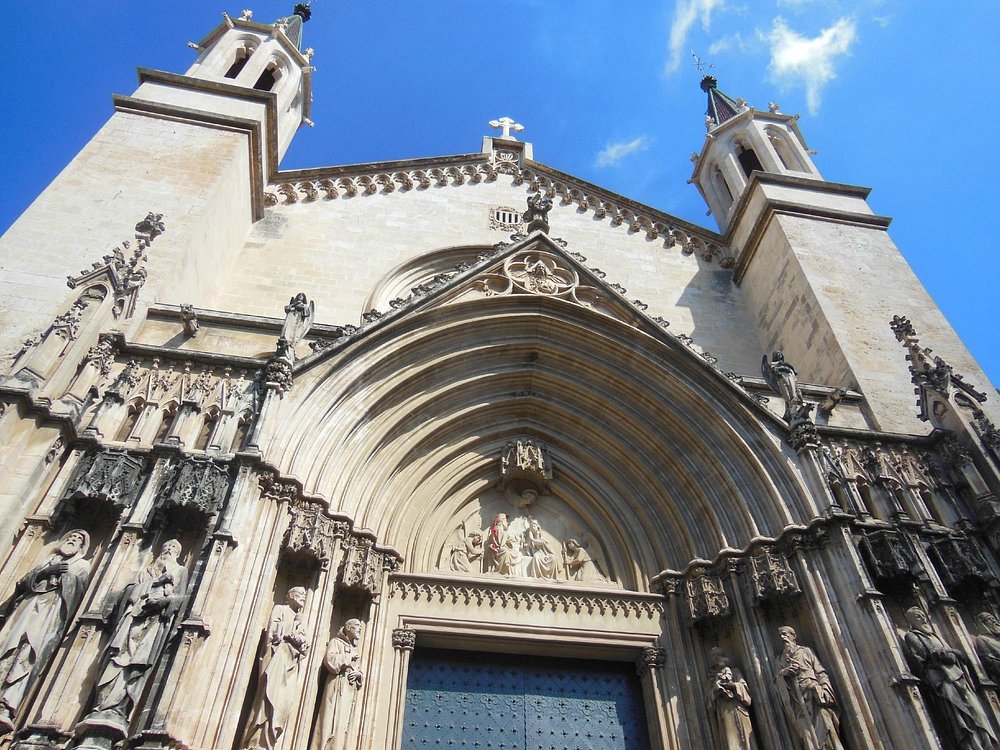
The side façade of Santa Maria Street preserves the original portal of late Romanesque tradition (13th century), still with remains of wall paintings depicting the Crucifixion. The main frontispiece, which overlooks the Plaza de Jaume I, is the result of the neo-Gothic reform of August Font i Carreras and Santiago Güell (1903-1905): a large pointed arch, the rossa and a spectacular crowning flanked by two slender octagonal bell towers. Inside, the light of the rose and stained glass fills the nave and draws shapes on the stone ribs.
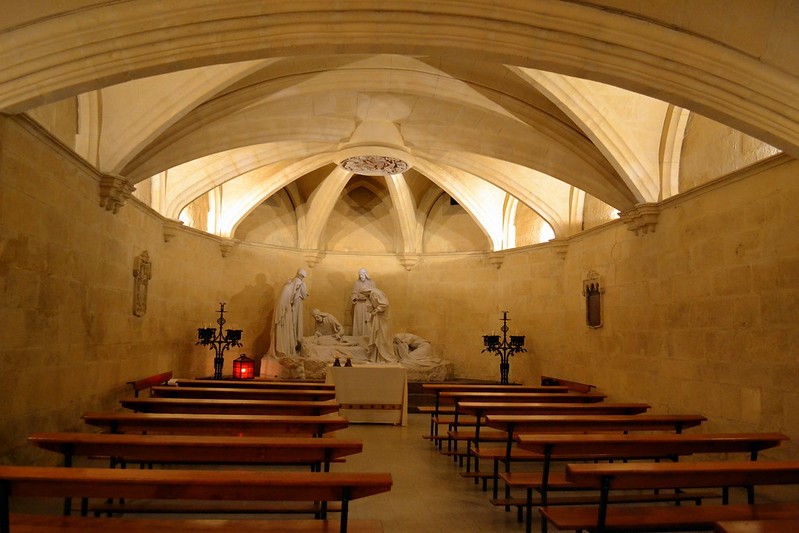
Just below the presbytery descends the crypt of the 16th century, an intimate space covered with a cruciform vault and decorated with carved keys representing Piety and the Resurrection. Bishop Torras i Bages commissioned in 1916 the marble sculptural group of Josep Llimona “The Burial of Christ”, a piece that turns the crypt into an authentic museum of devotion. The relics of St. Felix, patron of the Festa Major, are also venerated here.
The bell tower houses seven bells: four liturgical (Barberí 1939, the smaller one replaced in 1996 by a Paccard) and three clock—the large “Santa Raimunda”, cast in Vilafranca in 1801 by Joseph Vidal. The ensemble forms one of the most beloved folk carillons in the Penedès, which marks matinees and processions of the Festa Major with an unmistakable echo.
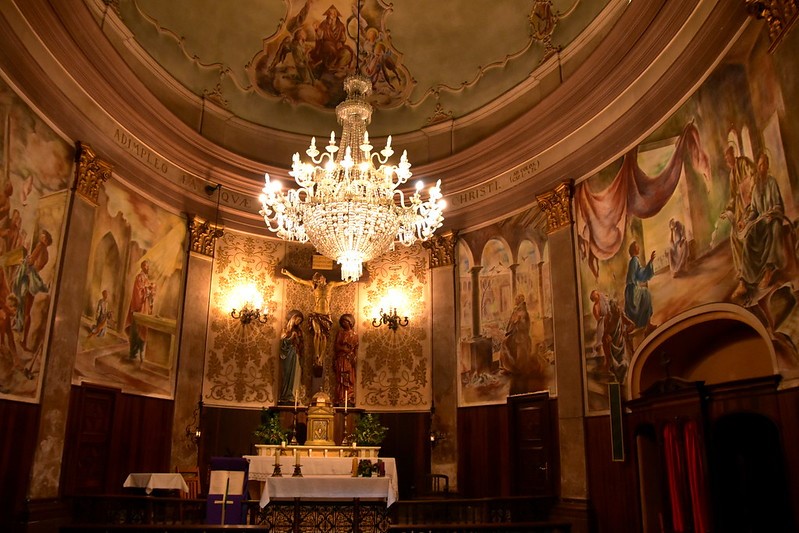
Inside, the polychrome ivory crucifix from the 18th century, the baroque altarpieces scattered around chapels, the collection of zoomorphic gargoyles on the outside and a monumental organ from 1942, a key piece of local musical life, are striking. Santa Maria was elevated to a minor basilica by Pope Benedict XV in 1919 and declared a Cultural Asset of National Interest in 2014.
The basilica has suffered numerous vicissitudes: the partial collapse of the vault (1735), the fire of 1934, the fans that in 2009 forced the start of the restoration project “Santa Maria 2020". Today, thanks to the patronage of the neighbors (you can “sponsor stones”), the temple sports new clean facades and hosts guided tours that allow you to climb the bell tower and enjoy a privileged panorama of the capital of wine.


 CAT
CAT ESP
ESP FRA
FRA POR
POR ITA
ITA ALE
ALE NLD
NLD ZH
ZH JA
JA