We use our own and third-party cookies for analytical and technical purposes, processing data necessary to create profiles based on your browsing habits. You can find more information and configure your preferences in 'Cookie Settings'.
 Back
Back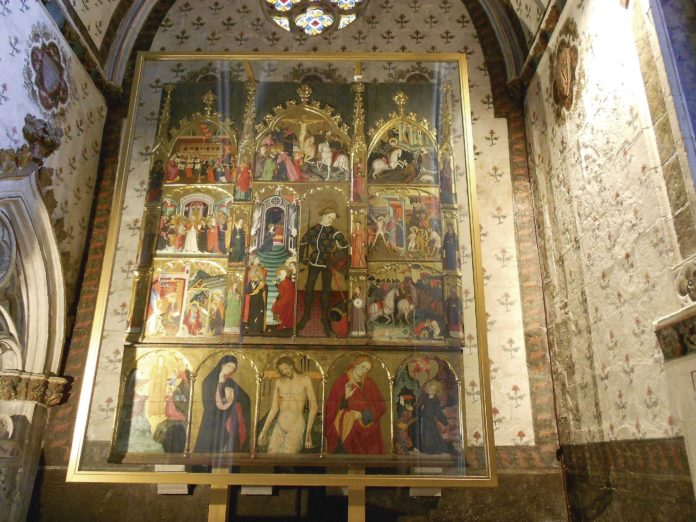
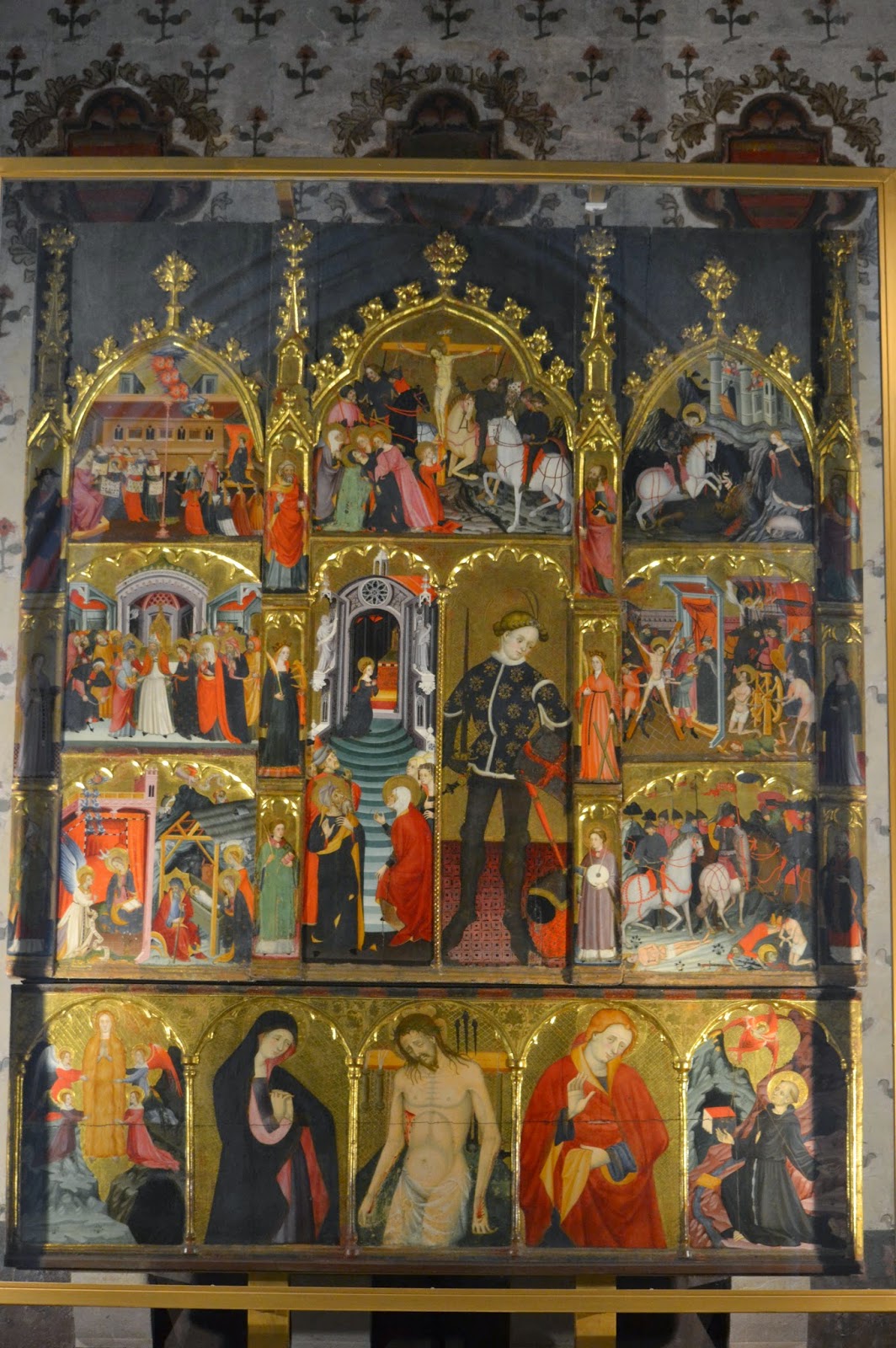
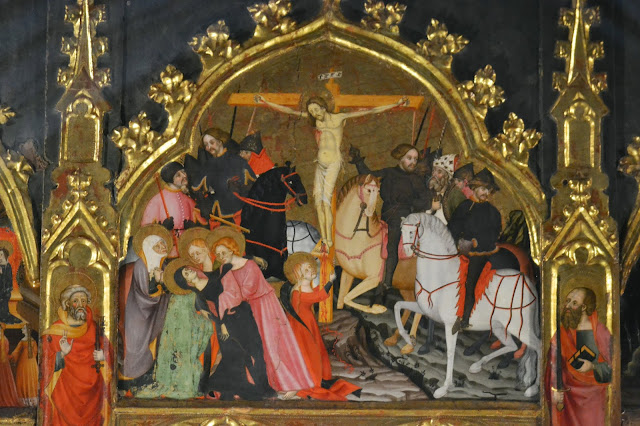
Hidden behind the pointed arch of the third southern chapel of the Gothic church of Sant Francesc, the Altarpiece of the Virgin and Saint George is a small marvel of Catalan painting of the late 14th century. The work, traditionally attributed to the Girona master Lluís Borrassà, summarizes the passage from linear Gothic to the international Gothic, with elegant figures, expressive faces and a chromatic balance that still surprises visitors today.
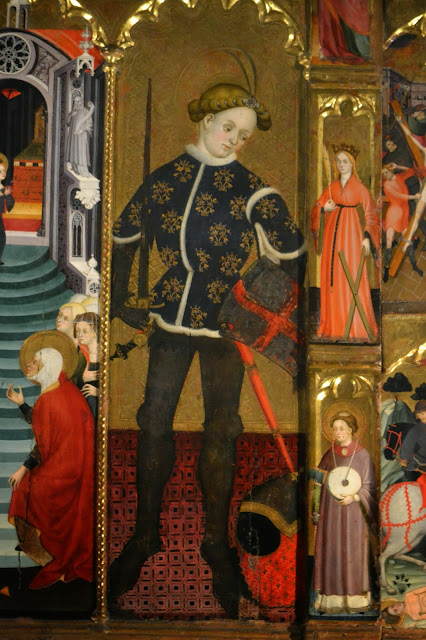
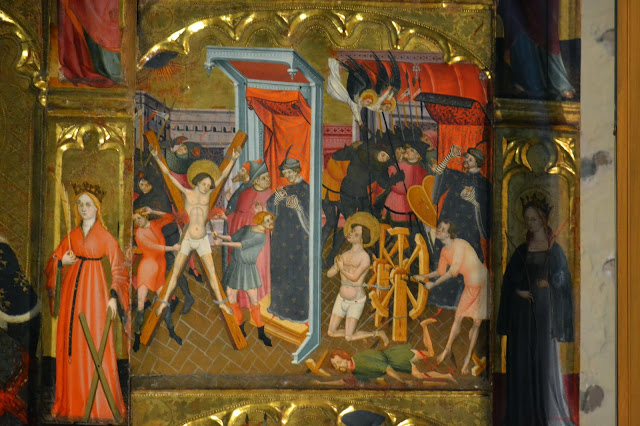
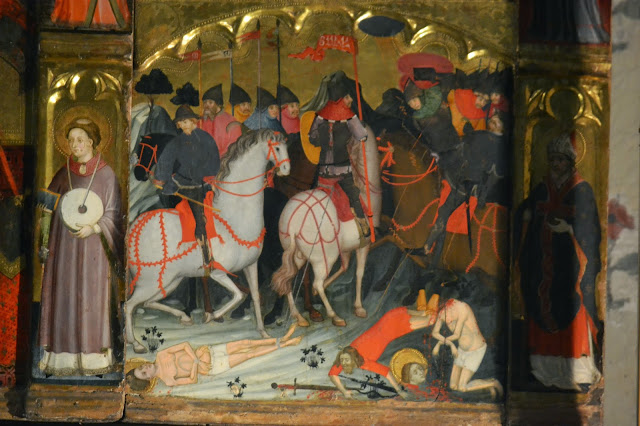
The set, in polychrome table, is structured in a main body with two alleys and on the lower terrace are represented several scenes from the life of the Virgin along with the episode of the dragon defeated by Saint George, patron of the cavalry; a prequel with figures of prophets and a coronation where Christ the Judge appears flanked by Angelic musicians. The golden backgrounds applied with golden bread technique and punch stews still retain, despite the oxidations, a powerful luster under the dim light of the temple.
Historically, the altarpiece was commissioned by the old jurors of Vilafranca to embellish the funerary chapel of one of the noble noblemen buried in the convent. Archival records point to the year 1401 as the probable date of delivery. During the expropriation, the ensemble suffered stone chipping and the loss of sculptural pieces, but the main tables remained in place. A restoration in the 1980s stabilized supports and polychromy, and a one-off intervention in 2007 applied selective cleaning criteria to recover shades of lapis lazuli blue and carmines.
Today the altarpiece continues to preside over the chapel, protected by a semi-transparent showcase that allows close contemplation and, at the same time, guarantees conservation. The convent guides explain how the folds of the dresses, worked with fine brush and veils, exemplify the stylistic turn towards courtly delicacy, while the dynamism of Saint George, lunging on the horse, maintains the narrative tension of the earlier Gothic. Every spring, coinciding with Sant Jordi, the altarpiece is the protagonist of a thematic visit that combines art and legend.
To contemplate it, in the gloom of the temple, is to be reunited with the most exquisite facet of Vilafranquí heritage: a piece by a well-known author, dated and preserved in situ, unusual in many medieval altarpieces of the country. It is, therefore, a must for scholars and curious who want to put a face and color to the pictorial past of the Penedès.


 CAT
CAT ESP
ESP FRA
FRA POR
POR ITA
ITA ALE
ALE NLD
NLD ZH
ZH JA
JA