We use our own and third-party cookies for analytical and technical purposes, processing data necessary to create profiles based on your browsing habits. You can find more information and configure your preferences in 'Cookie Settings'.
 Back
Back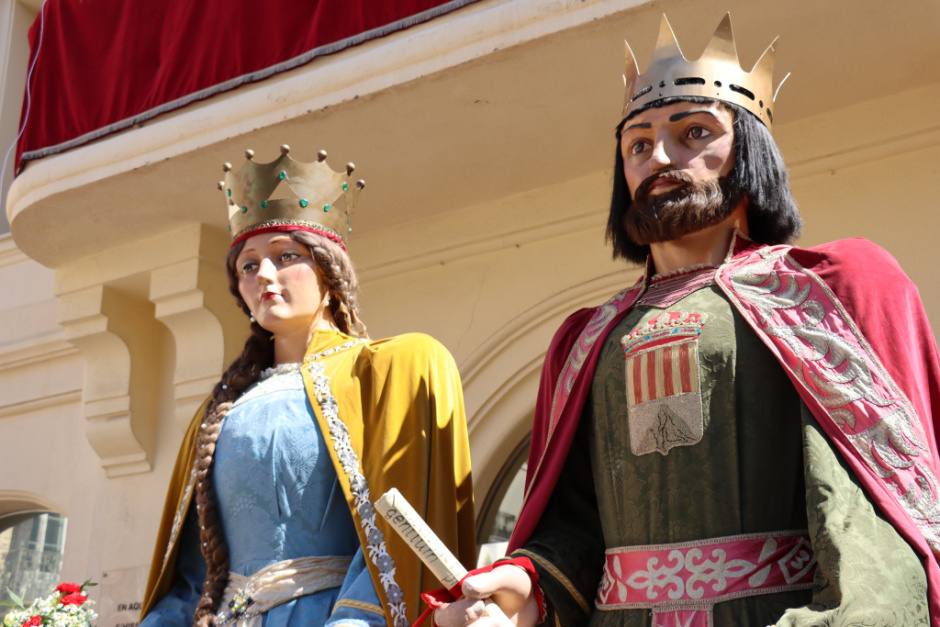
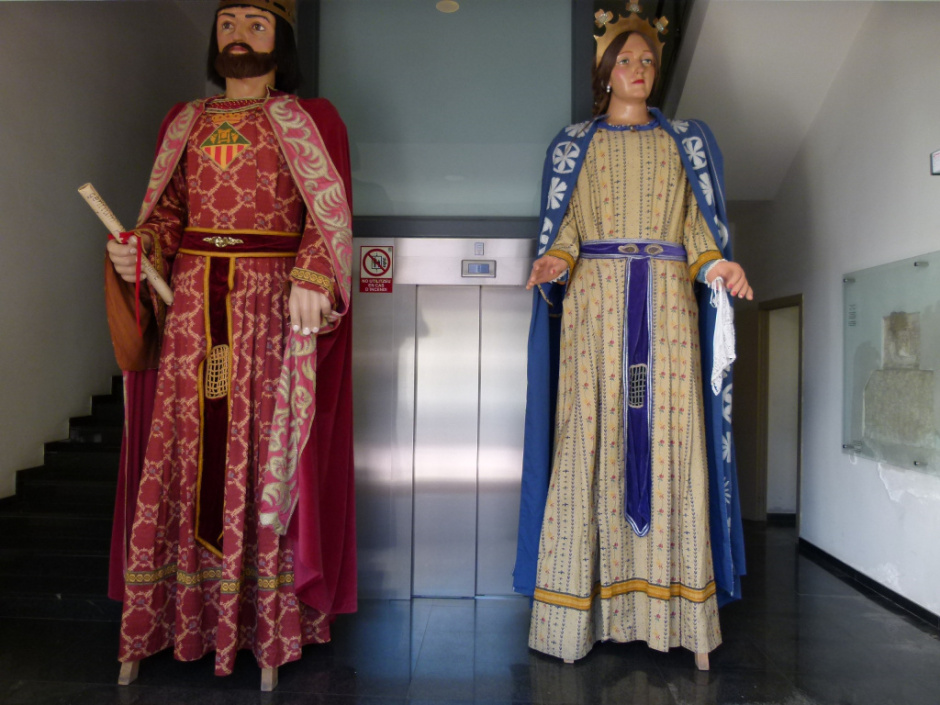
The Sadurninense pair of giants, popularly known simply as “the Giant and the Giant”, has been a living institution of the village since 1941. Built in cardboard-stone in the legendary Barcelona workshop El Ingenio by Domènech Umbert, they reproduce the Catholic Kings, Ferran and Isabel, a symbol of a historical past that traces the Penedese vineyard back to the unification of the Spanish Crown. At 3.35 meters high and weighing about 40 kilograms each, they parade majestically thanks to an internal structure made of light wood that allows the elegant dance characteristic of giant cobbles.
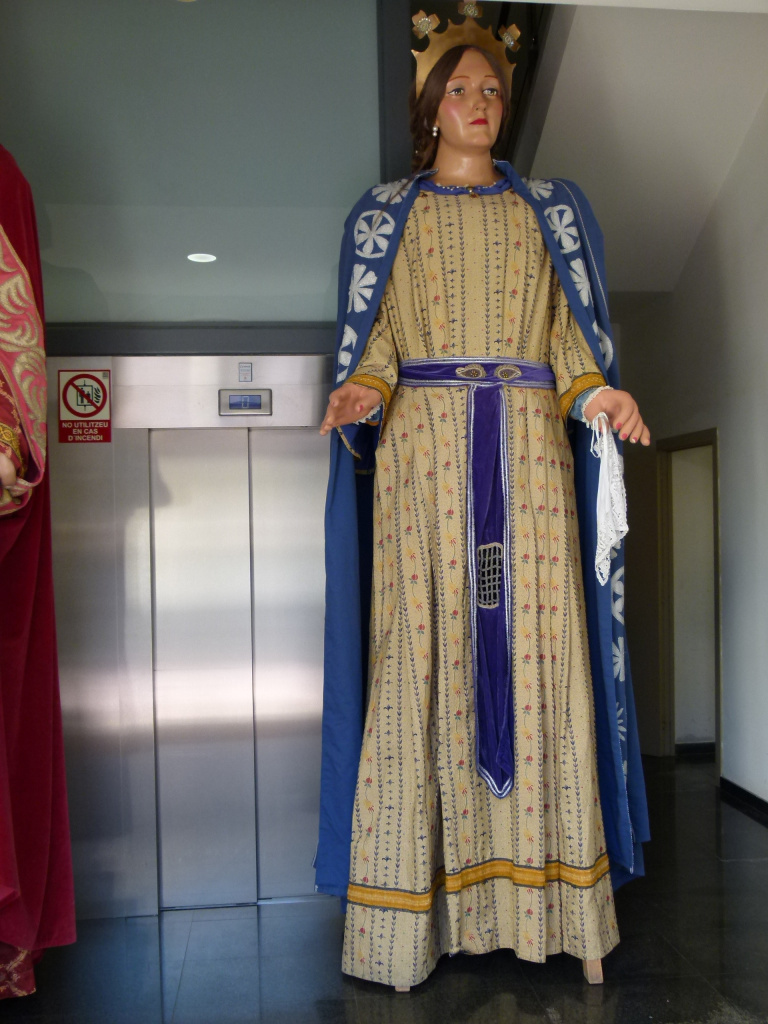
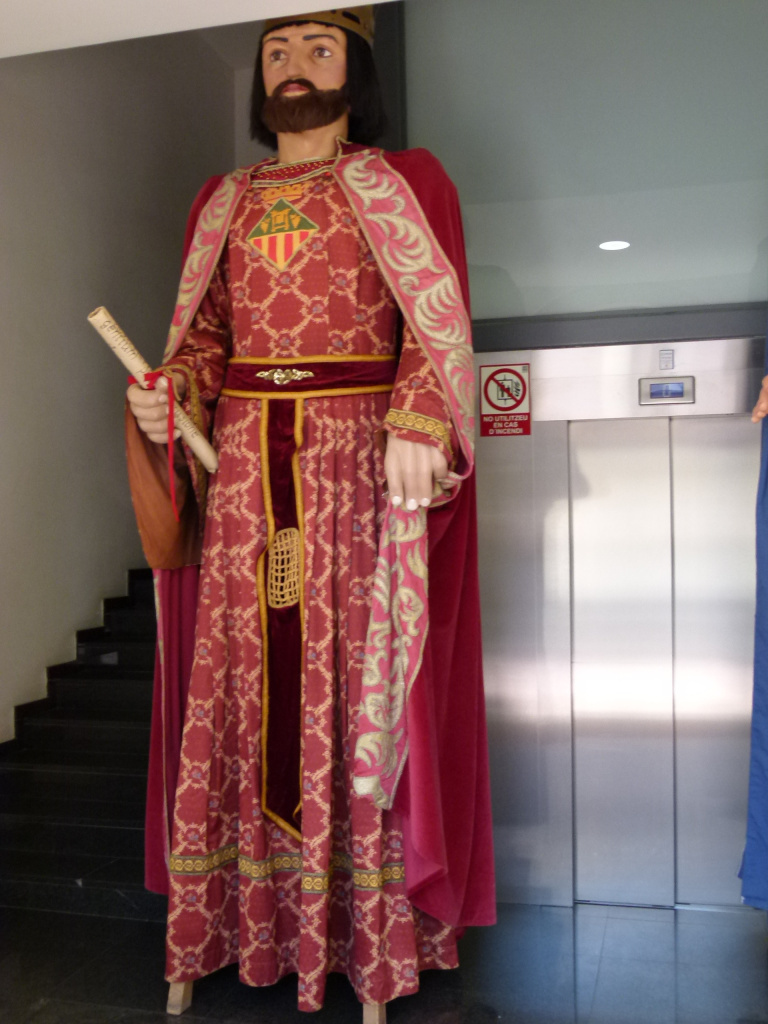
The Giant, with a beard and crown of aged gold, wields a rolled scroll, a reminder of ancient royal privileges; the Giganta, of serene expression, wears a bouquet of flowers and a lace handkerchief, motifs that evoke the fertility of the earth and the refinement of the court. Despite minor costume changes — documented in 1945, 1984 and 2017 — the royal iconography has remained intact, with rich brocades, velvet overlays and metallic rivets gleaming in the light of fireworks.
For decades, the giants came out only in processions of Corpus, Fairs and Festa Major, often carried by municipal workers. The revitalization of the 1980s — coinciding with the premiere of the Colla de Giganters following the opening of the 1982 FIFA World Cup — changed everything: the giants began to travel, to participate in meetings all over Catalonia and, above all, to dance to the rhythm of the contemporary cobla, becoming true ambassadors of culture sadurninensis.
In 2016, coinciding with the 75th anniversary, intervention was carried out on the internal skeleton: straps were lightened, the old neck pulley was replaced by an aluminum articulated system and the base was reinforced to facilitate the height of the new carriers. Two years later, in 2022, Juanma Avilés's workshop reviewed facial details, polychrome and gilding, returning the original nobility to the faces.
Currently, the couple goes out three times a year: at the Festa Major (where the institutional parade opens together with the Band), at the Philloxera night and at the week of the Barris, when the streets are filled with thunderstorms and carpets of flowers. Wherever they go, they awaken the same complicity: the children run to touch the apron of the Giant and the adults rumble on the old cobbles that mark their cadential step.
The giants usually rest in a hall of the City Hall, which can be visited at agreed times. Admission is free and explanatory panels detail the gigantic genealogy, with black and white photographs, fragments of scores from the 1940s and press clippings from the 82 World Cup tour. In this way, Ferran and Isabel continue to be much more than two cardboard mannequins: they are living memory, collective pride and, above all, a pretext for each generation to learn to dance, play the grill and love the party.


 CAT
CAT ESP
ESP FRA
FRA POR
POR ITA
ITA ALE
ALE NLD
NLD ZH
ZH JA
JA