We use our own and third-party cookies for analytical and technical purposes, processing data necessary to create profiles based on your browsing habits. You can find more information and configure your preferences in 'Cookie Settings'.
 Back
Back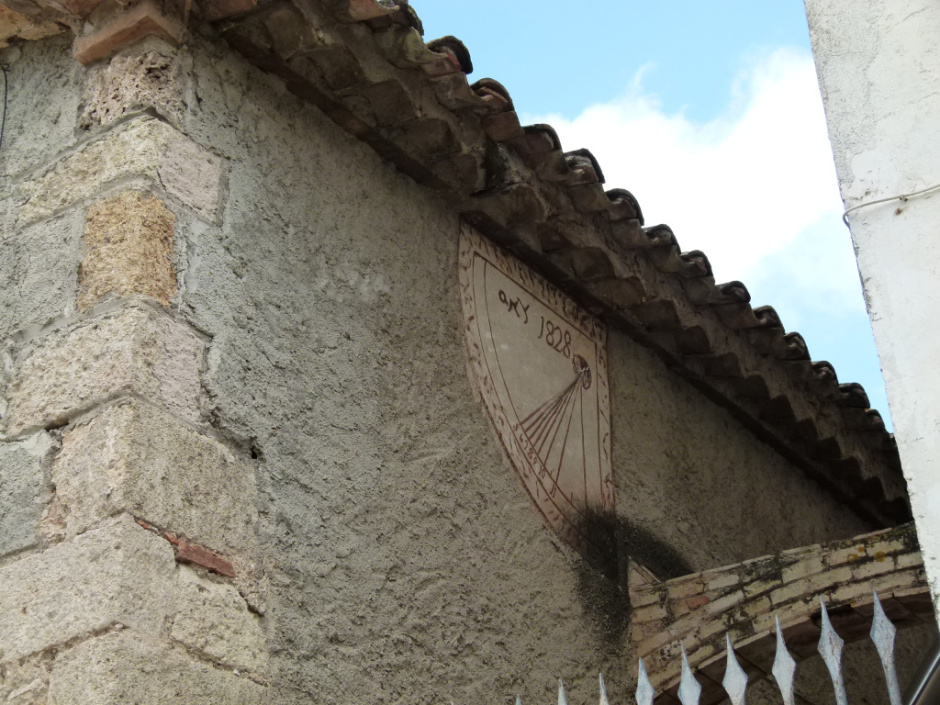
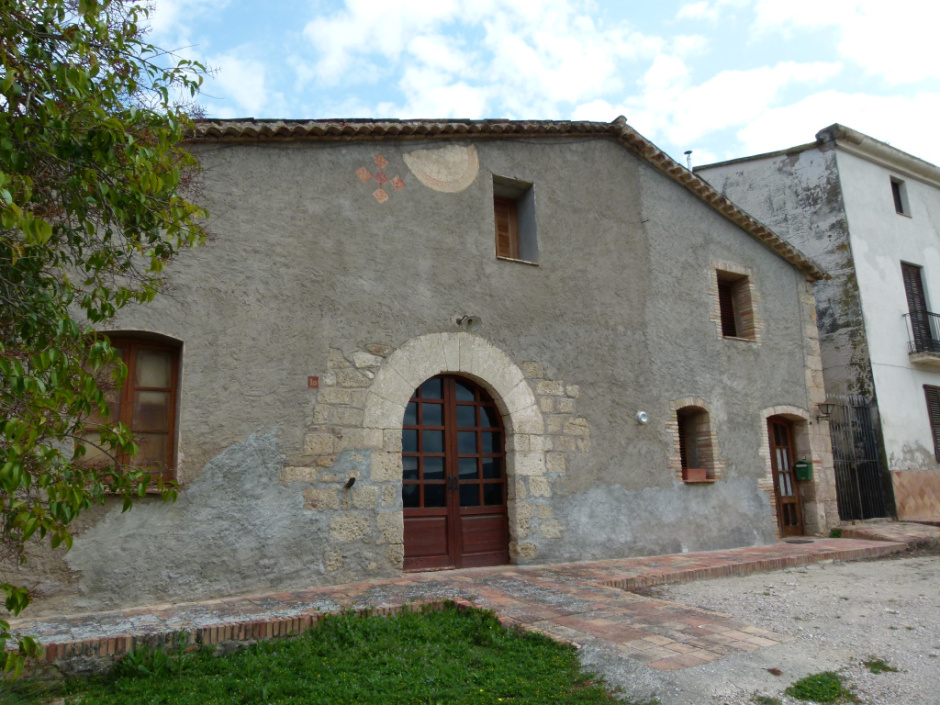
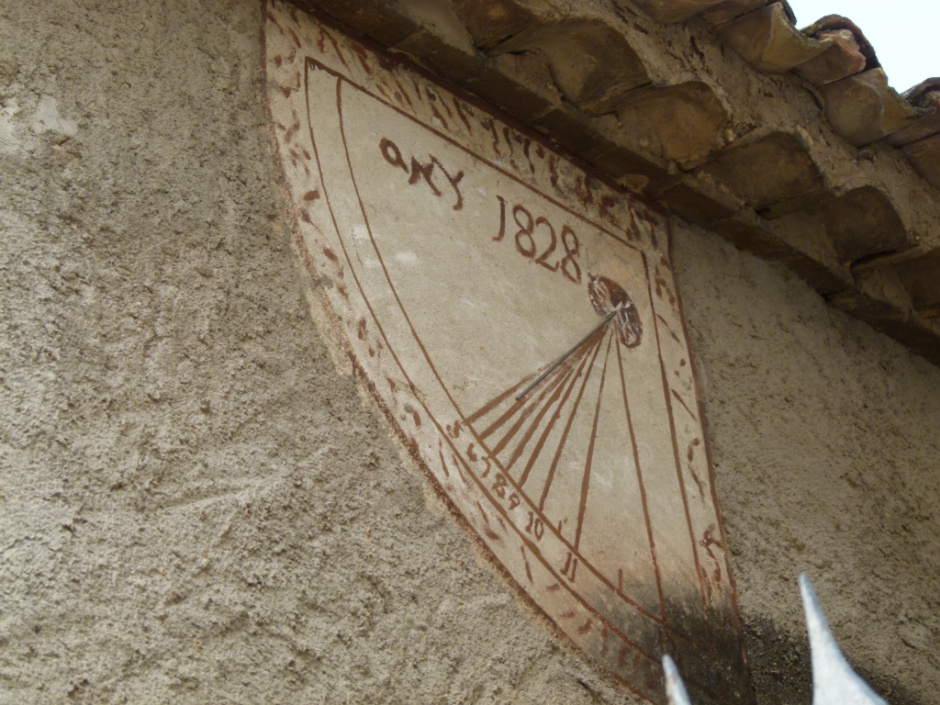
Hidden among the vineyards of the scattered nucleus of Alzinar, on the main facade of the century-old farmhouse of Can Llopart de les Alzines resists a sundial that, despite the passage of time and the mutilation of one floor of the house, still speaks of popular knowledge applied to gnomonics. It is a vertical declinating clock painted on the plaster, designed to indicate the hours between ten in the morning and six in the afternoon. The time lines, reinforced with dots for the quarters and a half hours, converge towards the space where the now-disappeared gnome was supposed to go.
The piece stands out for the Arabic numerals of the 19th century and for the small representation of the bell of the Angel located on the line of the twelve, testimony of a peasantry that regulated the day based on religious touches. Unfortunately, the pictorial layer is very degraded: cracks, loss of pigments and salts that loosen due to moisture. However, it is part of the Inventory of Sun Clocks of the Catalan Countries (number 4941) and is an essential file to understand the diffusion of these devices in the Penedès farmhouses.
The surroundings of the farmhouse, surrounded by dry stone margins and bundles of vines, offer a privileged panorama of the agrarian mosaic. The watch, privately owned but fully visible from the public road, remains as a reminder of a time without electricity or mechanical pocket watches. Today it is the object of study by schools and amateurs, and its dilapidated state has opened the debate on the need for a consolidation intervention to avoid the loss of this fragment of the peasant memory of Sant Sadurní.


 CAT
CAT ESP
ESP FRA
FRA POR
POR ITA
ITA ALE
ALE NLD
NLD ZH
ZH JA
JA