We use our own and third-party cookies for analytical and technical purposes, processing data necessary to create profiles based on your browsing habits. You can find more information and configure your preferences in 'Cookie Settings'.
 Back
Back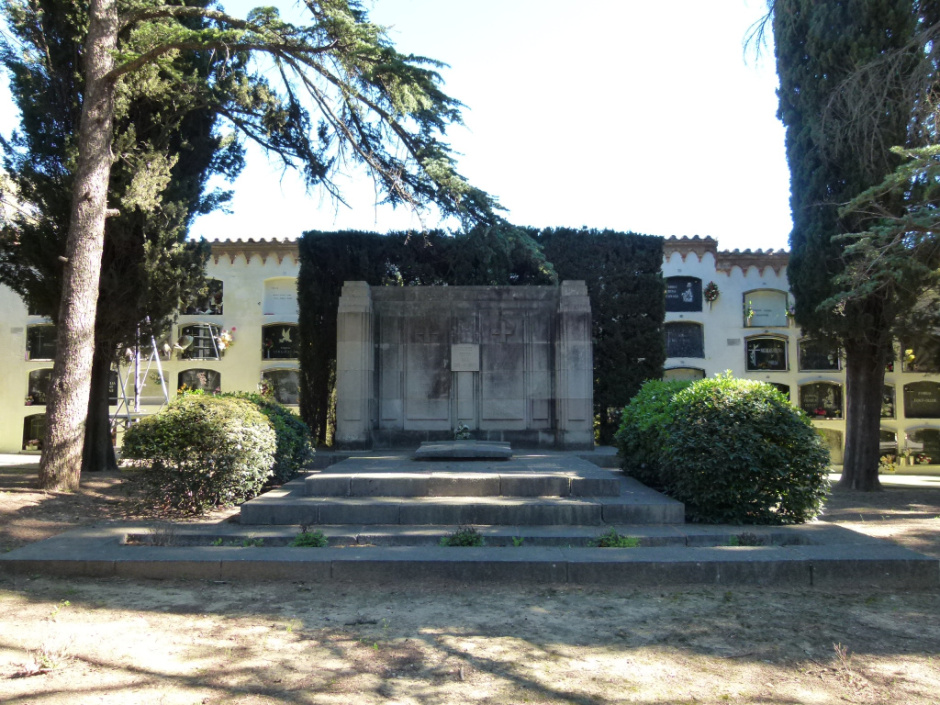
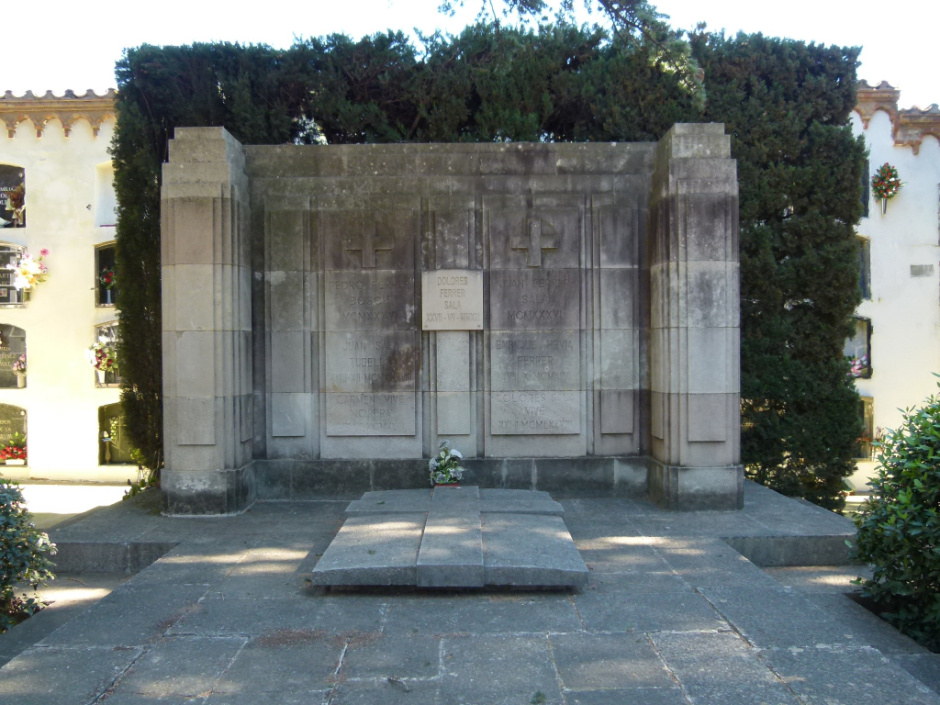
In a quiet corner of the municipal cemetery, surrounded by cypress trees and silence, stands the Pantheon of the Ferrer family, one of the most imposing funerary complexes of Sant Sadurní d'Anoia. Design and execution were carried out by the Barcelona architect Francesc de Paula Nebot i Torrens, who in 1939 opted for sober and symmetrical lines, heirs of the late Noucentisme, to pay tribute to the family that founded the giant Freixenet wine company.
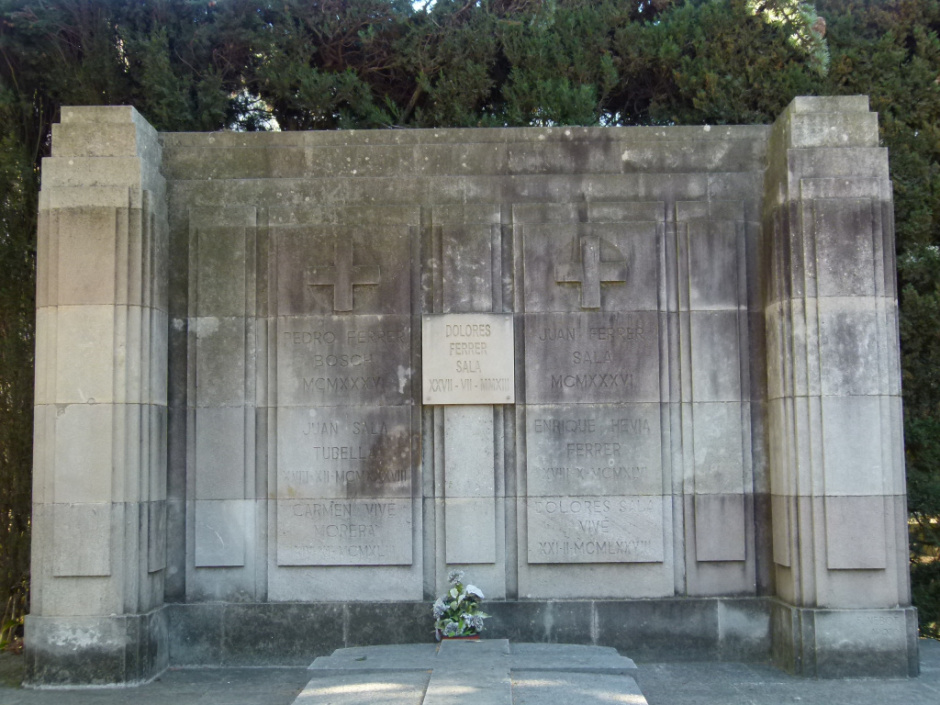
The structure, completely exempt, is built with blocks of cut and polished limestone forming molded polygonal pieces. The main wall, an authentic facade of the monument, is articulated by three vertical panels framed by adjoining columns of Tuscan order that imprint solemnity. Two white marble tombstones stand out in the centre, inscribed in Roman capital letters with the names of Pere Ferrer Bosch, Dolors Sala and their descendants. On each tombstone, a raised cross recalls Christian symbolism and the strong spirituality of the family.
In front of this wall is located a stepped rectangular platform on two concentric levels that acts as an atrium and at the same time as the roof of the burial site. The sill, perfectly cut, has a slight step that allows you to gain height and visual hierarchy. From the frontal perspective, the overlapping of planes and geometric purity evoke classical temples, but the ornamental austerity strongly refers to the ideals of containment and order of the interwar period.
The pantheon is not only an architectural piece; it is also a fragment of the economic and social history of the town. Pere Ferrer Bosch (1886—1936) and Dolors Sala Vivé (1889—1978) began in 1914 the wine adventure that would eventually crystallize in Freixenet, turning Sant Sadurní into the world capital of cava. The civil war, however, cut short the dream: Peter was assassinated in 1936, and three years later the family commissioned this pantheon to house his remains. The high reliefs and inscriptions with dates in Roman numerals underline the almost heroic dimension of a genealogy closely linked to the industrial and cultural development of the Penedès.
Over the years, other members of the second generation — Joan, Pilar, Carmen, Dolors, Francesc and Josep — have been buried in the enclosure, giving it a memorial value that transcends the strictly family sphere. Due to its scale and its bill, it is common for neighbors and visitors to stop for a few minutes during the guided routes through the cemetery to learn first-hand the history that hides behind the stone walls.
The state of conservation is good thanks to the high-density stone and periodic care of the family. However, the natural patina gives it the golden tone that the path of the sun accentuates at sunset, highlighting the moldings. Among the curiosities, it is noteworthy that the upper platform has been used sporadically as a base for floral offerings during the Festa de la Fil·loxera, when the town pays tribute to its prohomos of cava. Thus, the Ferrer Pantheon today becomes a space of recollection, memory and, above all, the collective pride of a community that drinks — never better said — from its own history.


 CAT
CAT ESP
ESP FRA
FRA POR
POR ITA
ITA ALE
ALE NLD
NLD ZH
ZH JA
JA