We use our own and third-party cookies for analytical and technical purposes, processing data necessary to create profiles based on your browsing habits. You can find more information and configure your preferences in 'Cookie Settings'.
 Back
Back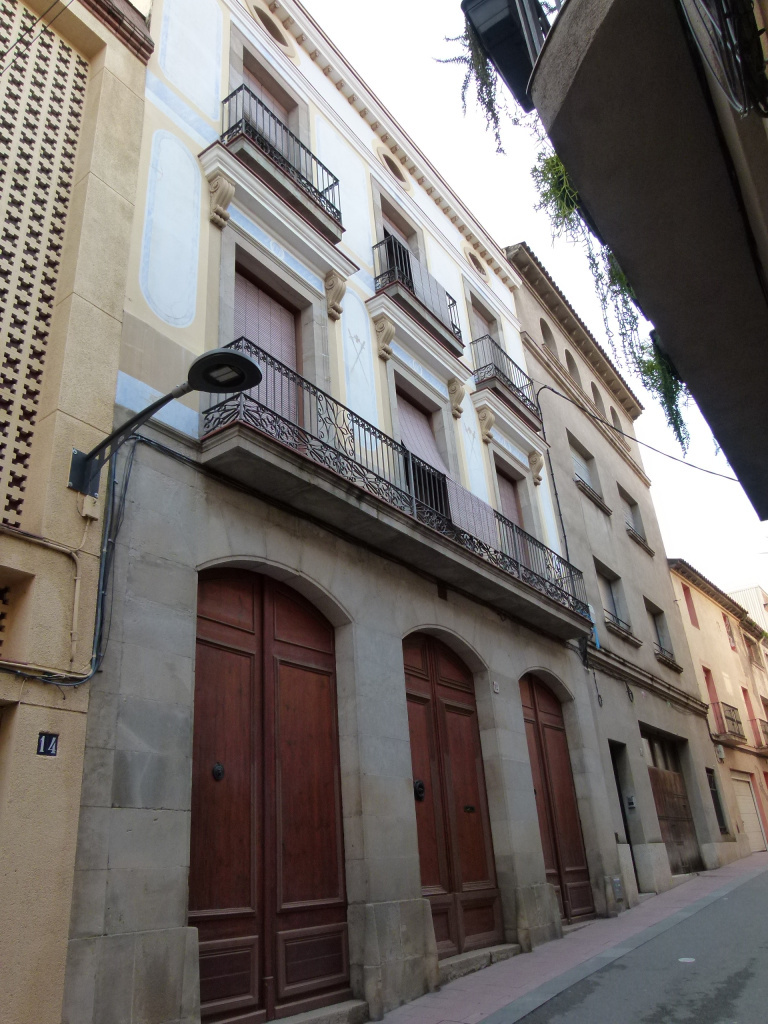
Erected in 1864 in the heart of the historic centre, Casa Madurell represents the solemn entry of eclecticism into the town. The commission went to Josep Madurell Vinyals, owner of the Prunamala i batlle farmhouse on several occasions — the first elected by universal suffrage in 1863. The Barcelona architect Carles Gauran i Casals, closely linked to the town, was the author of the project and also of the municipal plot.
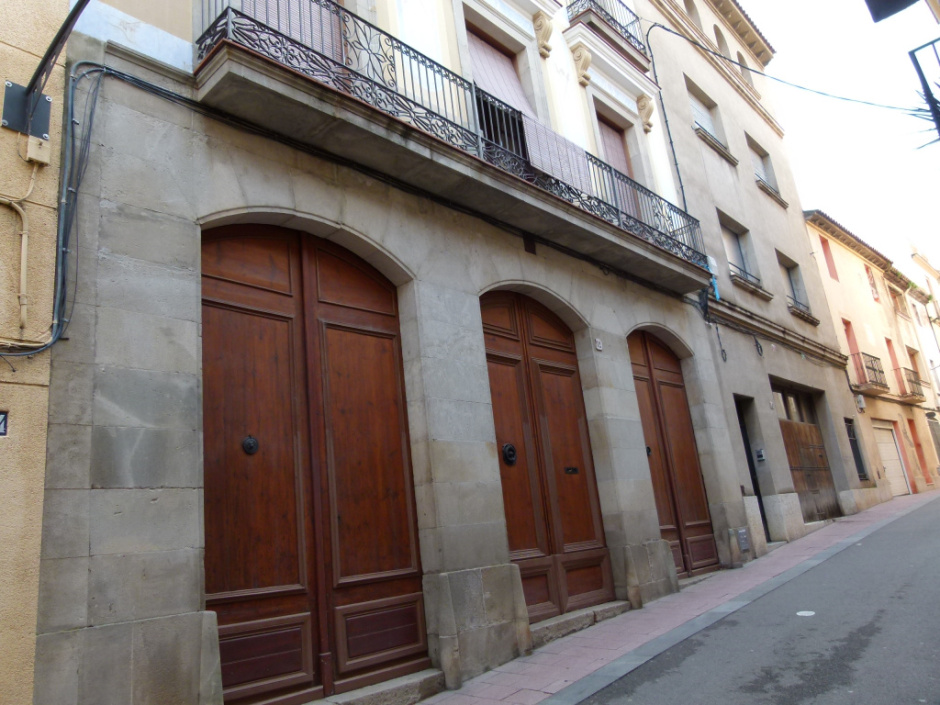
The building takes advantage of a large plot between Carrer de l'Església and Carrer del Campanar, which allows it to have a rear patio. It presents three identical crugies and a facade of absolute symmetry: ground floor, two floors and attic, all crowned by a molded eaves of prefabricated pieces.
On the ground floor, three low-arched portals with stone branches and prominent conical guardrails mark the access. Noble wooden doors still betray the social rank of the owner. On the first floor, the spotlight is on a balcony run with stone lozana and an extraordinarily worked wrought iron railing with ribbon geometric motifs and central flowers.
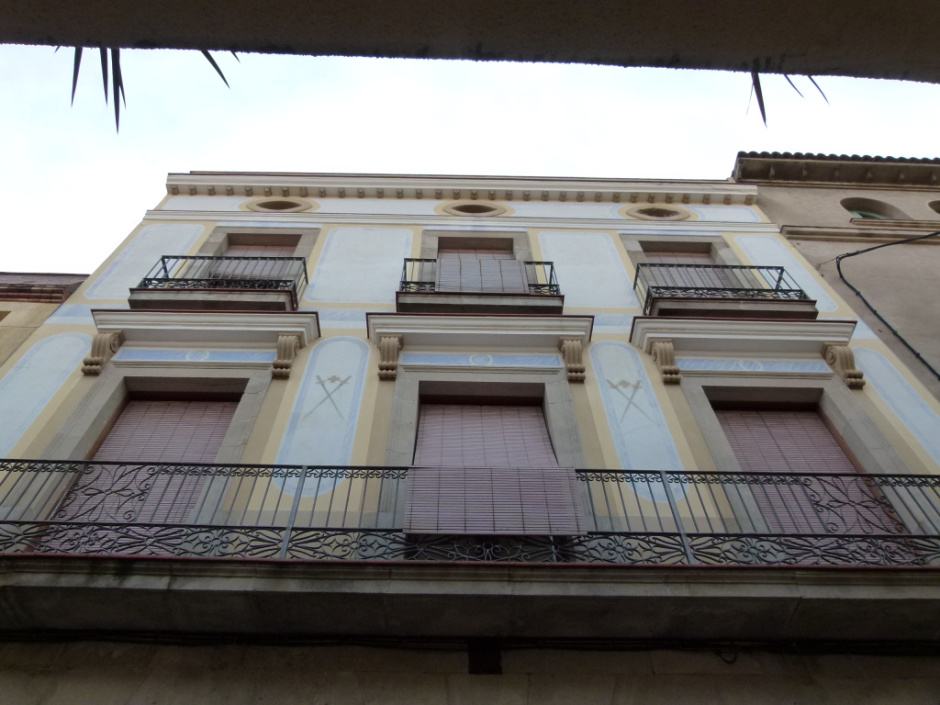
The pictorial finish imitates colored marbles and includes medallions and swords evoking the Order of Isabel the Catholic, a distinction awarded to Madurell during the construction of the railway. Above the openings, classic posters support a cornice. On the second floor, the balconies are individual and the decoration becomes more subtle, while in the attic three oval arches aerate the interior just below the eaves.
In 1940 a partial reform is documented, but the general appearance has been preserved thanks to the category of BCIL 1686-I (POUM sheet 5) and the IPAC code 2852. It is currently a private residence, although the Sadurninans consider it an inseparable part of the Church Street, which together with the bell tower forms one of the most celebrated postcards.
The house tells us of a moment of pre-modernist splendor where color, forging and honorary iconography combined to express economic power and prestige. When the midday sun illuminates the false marbles and ironworks, the façade seems to revive the toasts of the great occasions that Josep Madurell organized to celebrate the arrival of the train and, who knows, perhaps the first cavas in the region.


 CAT
CAT ESP
ESP FRA
FRA POR
POR ITA
ITA ALE
ALE NLD
NLD ZH
ZH JA
JA