
We use our own and third-party cookies for analytical and technical purposes, processing data necessary to create profiles based on your browsing habits. You can find more information and configure your preferences in 'Cookie Settings'.
 Back
Back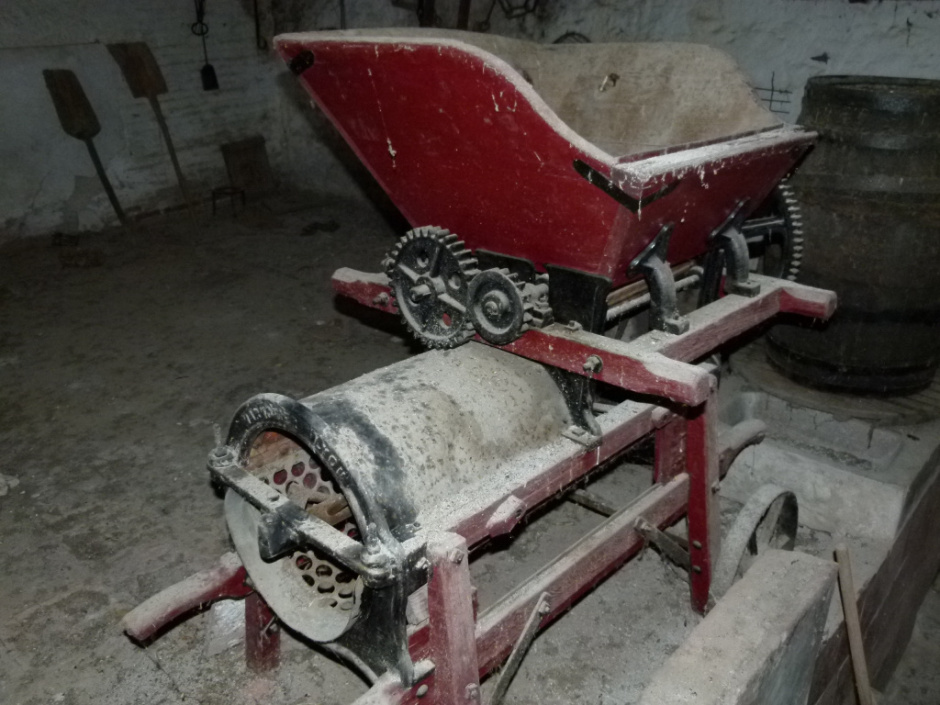
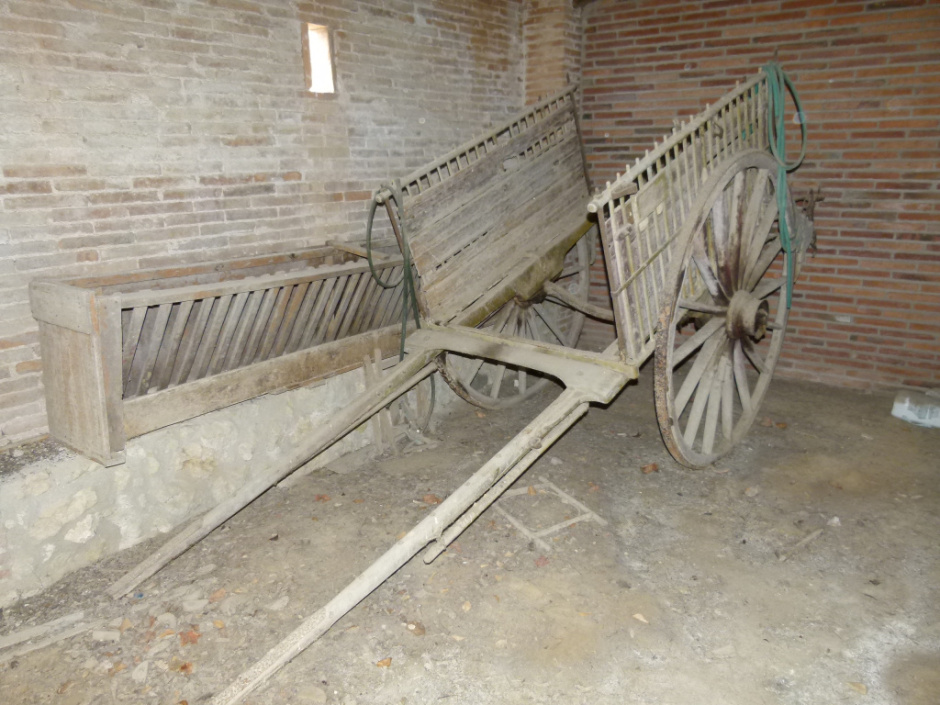
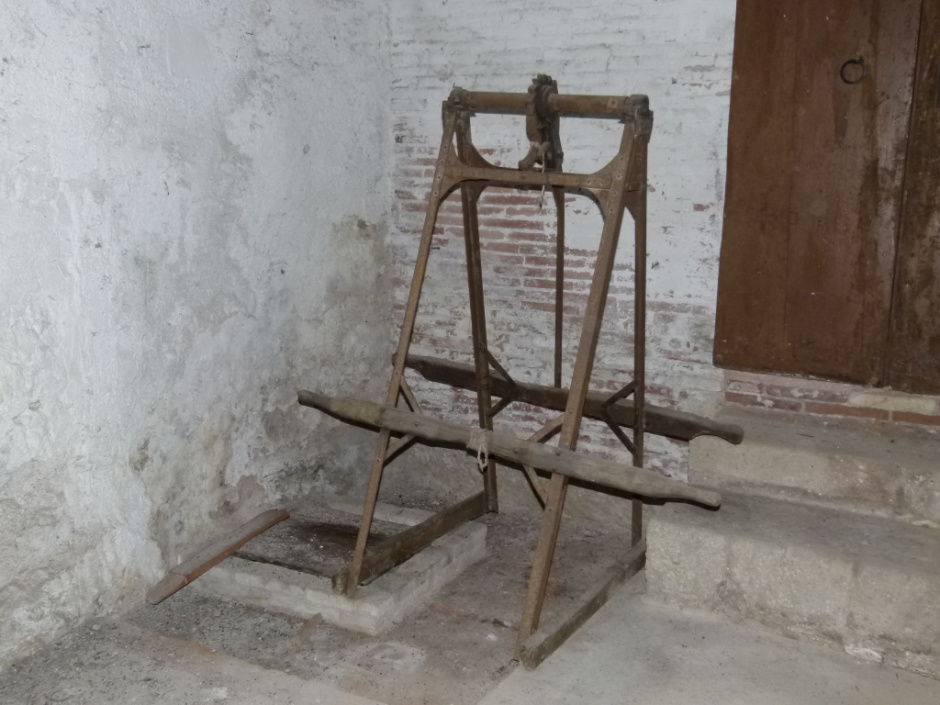
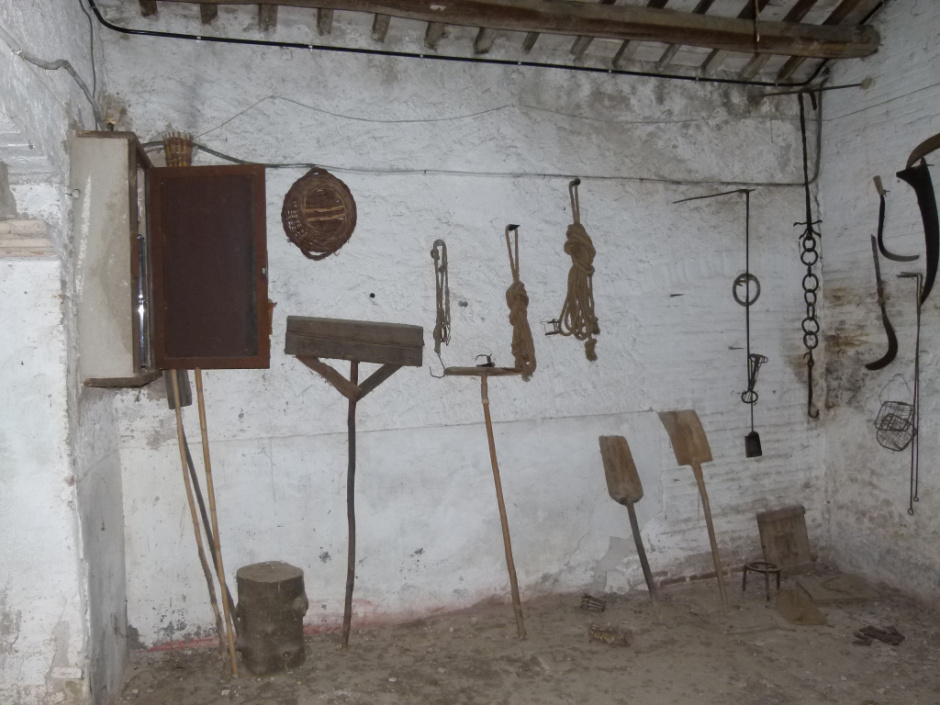
In the old annexes of the Espiells farmhouse —popularly Cal Domènech—, now integrated into the campus of the Mercè Rossell i Domènech Agrarian School of Viticulture and Enology, lies a small forgotten treasure: forty tools and machines illustrating the viticulture and traditional agriculture of the Penedès between the 19th and 20th centuries. The stone walls of the original cuts and beatings, partially obscured, serve as an improvised showroom where a marzanque cart, a grape treader and scraper, wooden shovels, sickles, stone rollers for crushing carob, wrought iron scales, trasbale pumps, backpacks of sulfating and even the remains of a monumental beam press.
Architecturally, the annexes retain the type of Penedès farmhouse: load-bearing walls of irregular stones bound with earth mortar, pine beams and orange tile on the ceiling, small openings to maintain freshness. The space is not museumized; the objects rest on old slabs or hung from beams, which reinforces its authenticity but also hinders conservation.
The history of the collection is inseparable from the Domènech-Vinyals family. Manuel Domènech Vinyals detected on October 15, 1887 the first phylloxera vine of the term, right on this farm. Years later, his niece Mercè Rossell Domènech ceded the property for the Diputació de Barcelona to build the Agrarian School there (1985-1987), with the intention that future professionals would learn respecting tradition. The tools, inherited from generation to generation, remained as didactic material and testimony of a resilient peasantry.
The whole is heterogeneous: there are mowing tools, specific tools for the cava - carriers, bocois, narrow plows for vines - and more modern devices, such as a mechanical vine weeder from the 1960s. Each piece shows the popular ingenuity to adapt to the calcareous soil, gentle slopes and dry microclimate of the area.
Despite the heritage interest, the space remains closed to the public and many pieces show signs of rust and cracked wood. The School's teachers, however, occasionally use it in agricultural technology classes to compare evolution with contemporary machinery. There are embryonic projects to dignify it and open it in open days coinciding with the harvest.
For the Sadurnines, this collection is a living memory of the ancestors who transformed the region into the world capital of cava. Each rusty ear or stone roller evokes the fight against phylloxera and the effort to reinvent itself that marked the character of the town.



 CAT
CAT ESP
ESP FRA
FRA POR
POR ITA
ITA ALE
ALE NLD
NLD ZH
ZH JA
JA