We use our own and third-party cookies for analytical and technical purposes, processing data necessary to create profiles based on your browsing habits. You can find more information and configure your preferences in 'Cookie Settings'.
 Back
Back
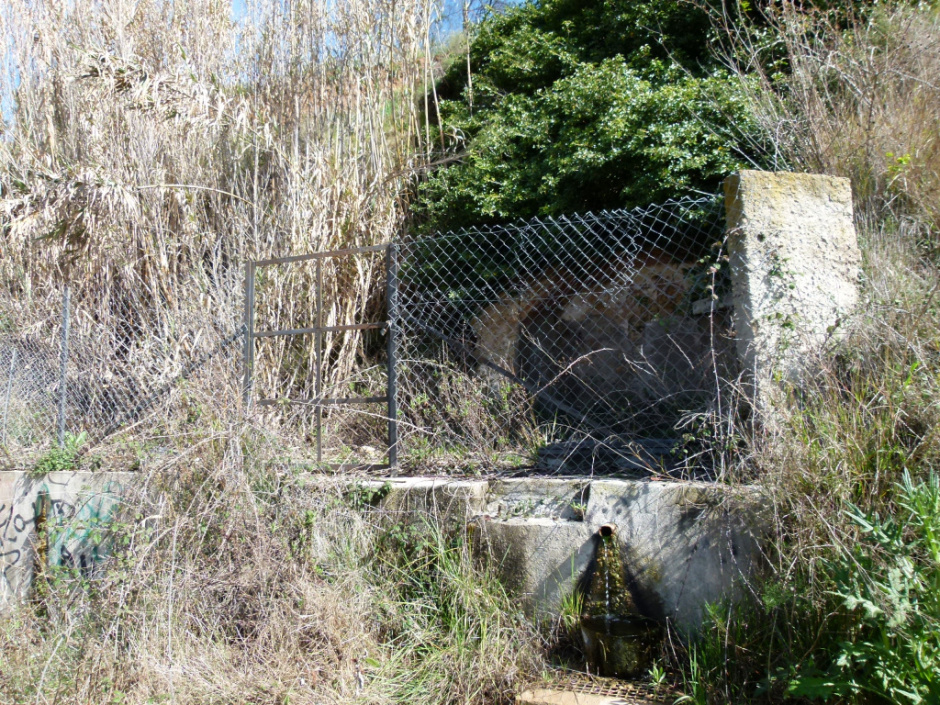
Among the orchards that once supplied the town, very close to the Blancher cavas, springs the Can Santet Fountain. Dated according to inscription in 1853, it is a simple construction but revealing the desire to master groundwater to supply self-consumption agriculture.
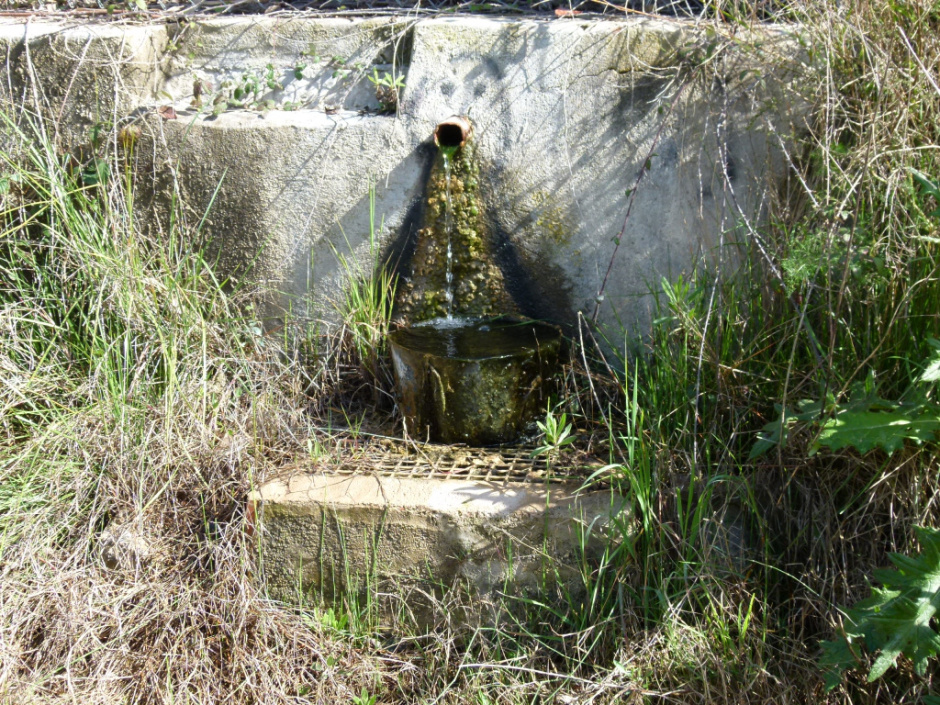
Today the emergence is channeled: the water emerges through a metal tube attached to a robust concrete wall, inherited from recent repairs. The nozzle falls vertically inside a circular sink lined with grate, ensuring that it does not clog with blades and providing safety. As in other urban sources in the area, the liquid is not suitable for drinking.
Despite the proximity to the core, the corner maintains a collected air. The shade of the old fruit trees and the presence of aromatic herbs are reminiscent of the old horticultural use of the sector. Some neighbors stop by to refresh themselves or clean up small crops, turning the fountain into an informal meeting point.
The site does not have heritage protection or tourist furniture. Its conservation lies with private property, which allows, however, free access. The City Council has inventoried it as an area of natural interest and is monitoring it.
The dating of 1853 testifies to a time when, before the arrival of the municipal water network, each farmhouse and each vegetable garden were used to capture and store water resources. Visiting Can Santet is to understand how the culture of water shaped the Sadurninense physiognomy well into the 20th century.


 CAT
CAT ESP
ESP FRA
FRA POR
POR ITA
ITA ALE
ALE NLD
NLD ZH
ZH JA
JA