We use our own and third-party cookies for analytical and technical purposes, processing data necessary to create profiles based on your browsing habits. You can find more information and configure your preferences in 'Cookie Settings'.
 Back
Back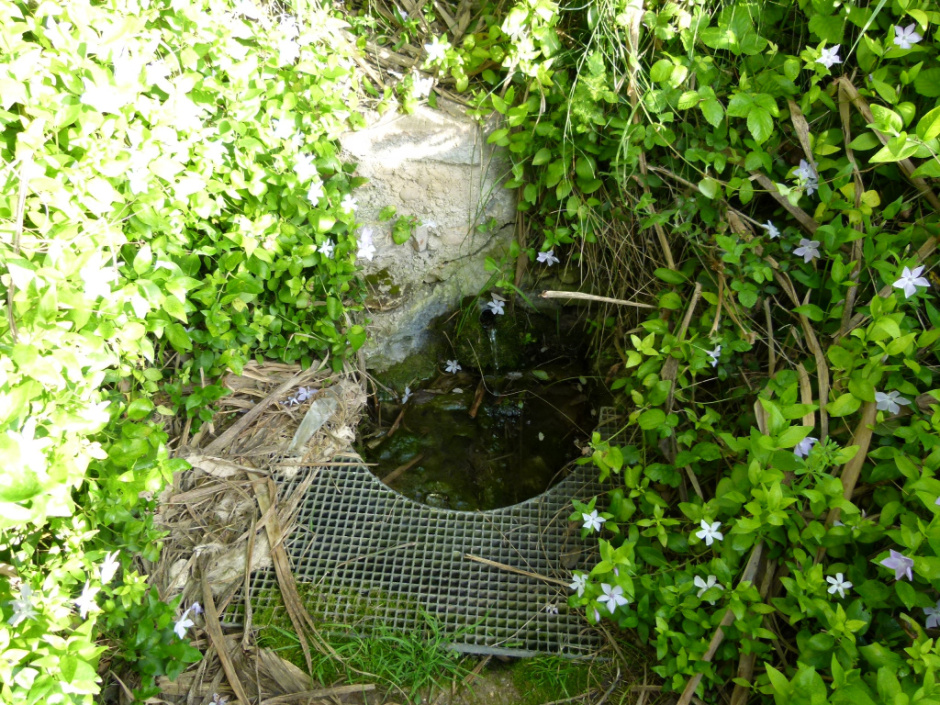
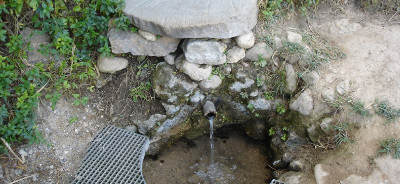
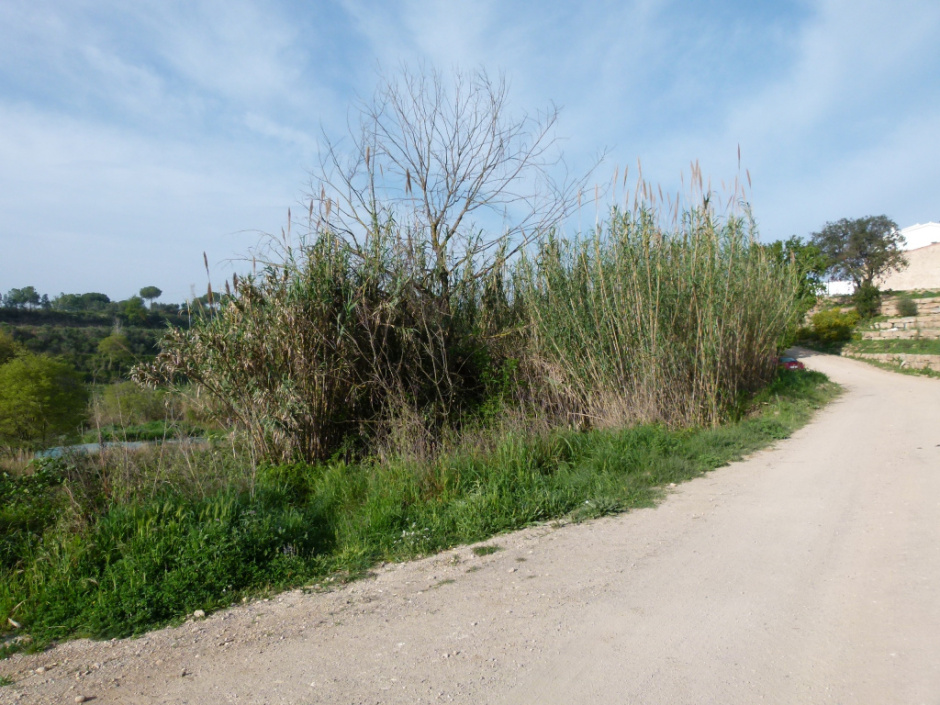
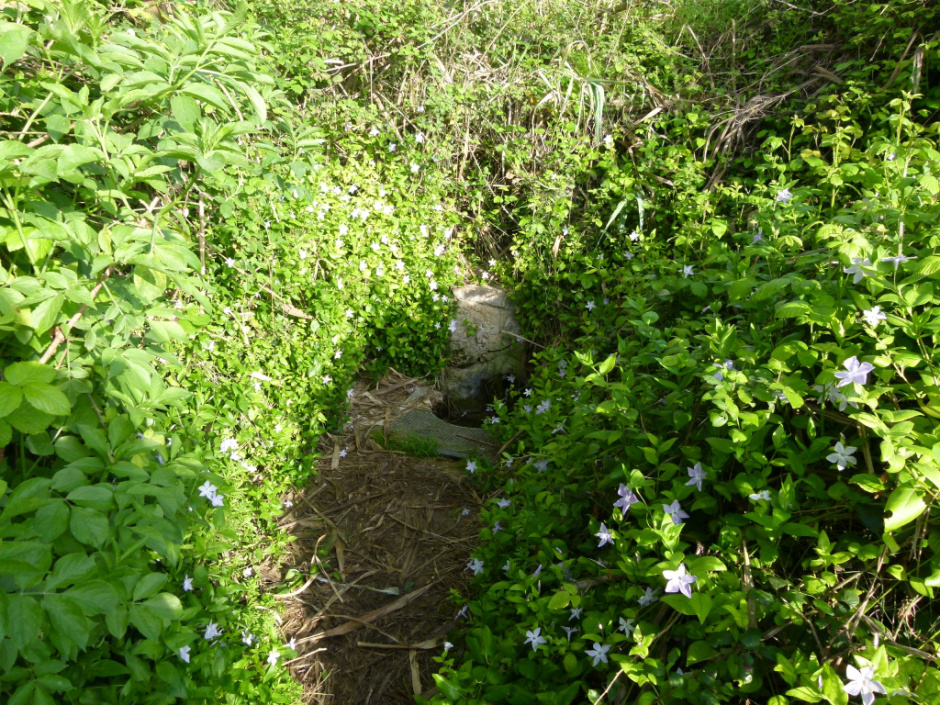
The farmhouse of Cal Mota, surrounded by old vineyards and cereal fields, enjoys its own fountain next to the edge of the access road. The mouth is born under the protection of a clay slope and flows through a simple spout that drains into a small natural watershed. According to the collection of Manel Córdova (1999) the flow is perennial, which has allowed, a few meters below, to build two rectangular ponds (4 × 2 m approx.) that are still used today for irrigation of the farm.
The whole does not have elaborate stone work: a smooth concrete wall protects the tube and prevents the rubble from collapsing the catchment. The water, however, is not suitable for human consumption, a fact indicated by metal posters placed by the owner.
Biologically, the point has favored the presence of a small reed bed and burrows that share the space with ivy and soft grass. During the dry months, wildlife — especially blackbirds and lizards — find refuge there.
Despite being private land, the fountain is freely accessible and often the neighbors take advantage of the shade to make a stop there when they walk. The consistory classifies it as an area of landscape interest without any protection figure or short-term museumization project.
Cal Mota and its fountain recall the importance of small surges in the traditional economy: before the mechanization of irrigation, every drop was used for vegetable gardens and livestock. Today, although the ponds are only filled in a testimonial way, the place maintains its rural charm and tells us about the historical management of water in the Penedesco farmhouses.


 CAT
CAT ESP
ESP FRA
FRA POR
POR ITA
ITA ALE
ALE NLD
NLD ZH
ZH JA
JA